Fear of writing — we’ve all experienced that twist in the gut over self-revelation and what other people might think of us. Or, over our revelations about other people’s behavior, and how those revelations might kill off important relationships. In the inaugural video of what author Sandra Gail Lambert and I hope will be a series, the Hip Chicks on Writing (irony intended) discuss these fears.
Author: Michele Sharpe
“What we’re reading” chooses “Buckle & Sway”
Super-cool webzine VELA highlighted Catapult’s adoption series last week, and called “Buckle and Sway” a “haunting, sparse essay.” Blushing!
My aunt, Rose, who is the center of the essay, is tickled, too. For over twenty years, she’s been asking me when I’m going to write the story of our family, and I’m finally starting to deliver on my promise that I would.
Over Fifty and Finding Work
Lucky me, to work in a program that does so much for our community! Here’s an article I wrote all about it for The Gainesville Sun.
Postcards from Here
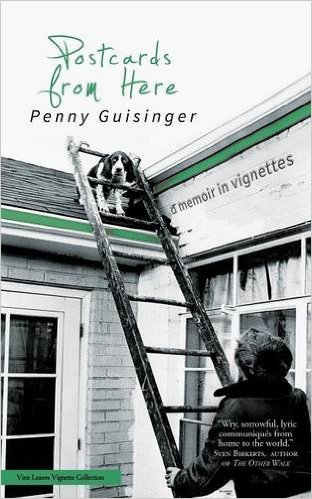
Penny Guisinger‘s memoir in vignettes, POSTCARDS FROM HERE is the most original book I’ve read since Sandra Gail Lambert’s THE RIVER’S MEMORY. In sharp bursts of brilliant prose, Guisinger moves from one closely observed event to another. It’s the movement that makes this book so original: these self-contained micro-essays are not in chronological order, and there’s no overt plot, but the language itself pulls you along compulsively. I literally couldn’t put it down.
The bonus here is a profoundly intimate look at life in Downeast Maine, a landscape that has been romanticized almost to death. Guisinger’s deep connection with the land, the people, and the culture will resonate with anyone who has loved the Maine coastlines, towns, and forests.
She thought she was me
It’s so cool to be a part of Catapult’s series on adoption with cool writers like Nicole Chung!
Born in the same year as I was, my aunt Rose spent a good part of her life thinking she was the baby girl my mother had given up for adoption. But that baby girl was me.

Family Tree Four
Maybe it was me who doctored this  photograph, trying to give it an heirloom appearance.
I see a “B” in this tree. Or maybe a “D,” or a sideways “A.”
Or a man, hanging face down with his arms extended, reaching for something on the ground.
Or a lizard with its tail curled up behind it. Or the familiar snake.
Or a tree, twisted by snow and ice, and the deaths of other trees, and by forces I cannot imagine, putting forth the predictable new growth in spring.
What do you see?
A Third Family Tree
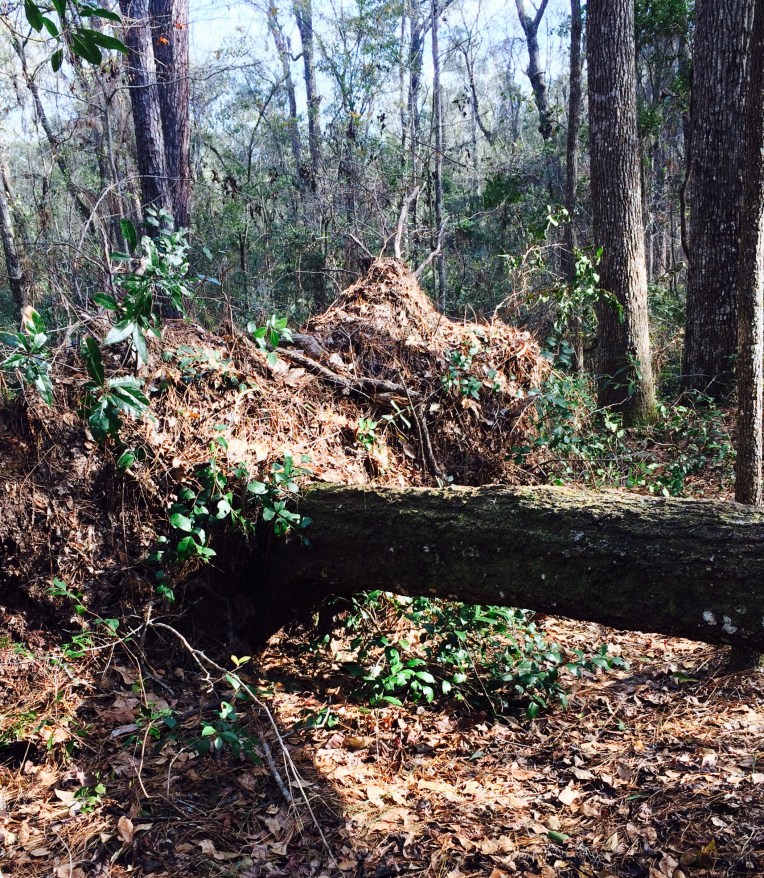
This tree took the earth with it when it tipped over in a windthrow. It is the only tree in this quadrant that fell, so perhaps some other trauma, like a fungus, impacted its anchorage and prepared it to let go.
The letting go starts a new creation story: a hole opens in the canopy, and sunlight pours down on the forest floor. Saplings stuck in the pole stage may wake up and start to grow again. Flowers may bloom.
New stories mean new names. The earth ripped up with the tree is now a tip-up mound. Underneath it, bare soil is exposed where tortoises may burrow, or foxes may shelter, or seeds may sprout.
When summer comes, the small cave under the tip-up mound will be cool and dim, and those inside can turn their faces up to see the old root network over their heads, and then tell their own stories.
Another Family Tree
This tree has been dead for so long, you can see right through it in spots. How did that happen? I imagine the branches fell first, then the crown, and then the bark sloughed off like the skin of a snake, and then the core collapsed on itself. What’s left is a dynasty in decay, a suggestion of the strong column it once was, a gesture toward how the column once spun upward in helix fashion.
Still standing, even after the flooding rains of last summer, the tree’s roots must anchor it to something solid under the shifting leaf litter and sand. Limestone? What’s left of the tree has the pocked and scored look of the karst limestone around these parts. Maybe the tree has taken on some characteristics of the stone.
I’ve sat with this tree off and on for five years. Although I never knew it when it lived, even long dead, and even taking on other characteristics, it remains a tree. 
A different kind of family tree
I leaned against trees, wrapped my arms around trees, rode thick tree branches like they were horses. I swung from trees and hid in trees, and walked on limbs as if they were tightropes. I prayed to trees, I raged at trees. My half-brothers cut them down for money, and cut the bamboo too.
In my private forest, which isn’t mine, but belongs to the town, I watch this tree, and the spiral of fungi around its trunk. It might be my family tree: no hierarchy, no single ancestor, and certainly no single pattern.
 Michele Sharpe