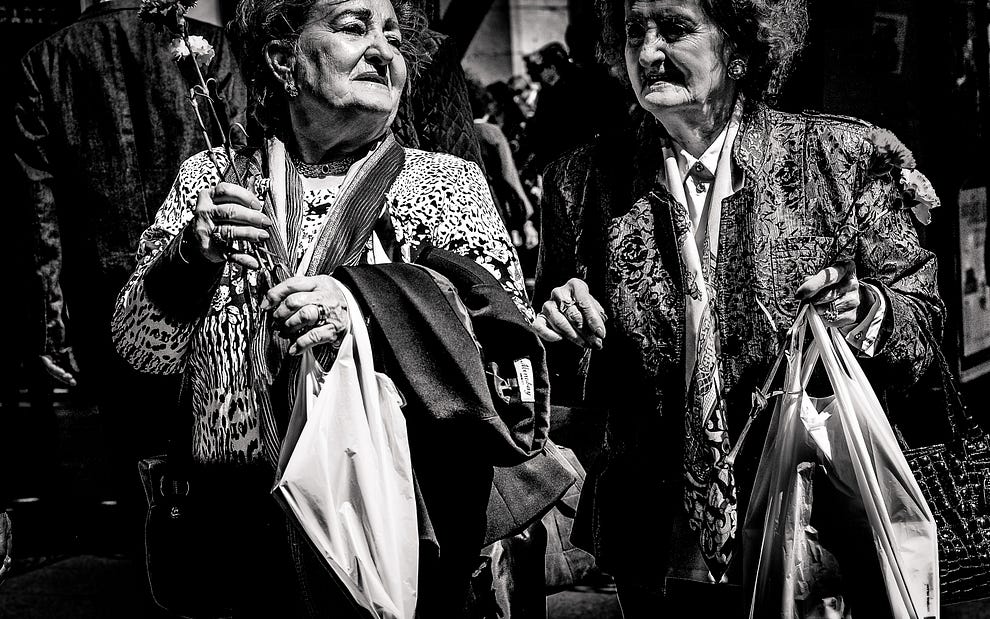
“Black and white shot of two old women carrying bags in Zaragoza” by Rubén Bagüés on Unsplash
The term “old wives’ tales” is meant to be derogatory, like so many phrases that make mention of women. I’m reclaiming it right this minute. I’m old, and I’m a wife. And I tell tales.
Some folk wisdom, once disparaged as old wives’ tales, is turning out to be true. Also, the trees can speak, you know.
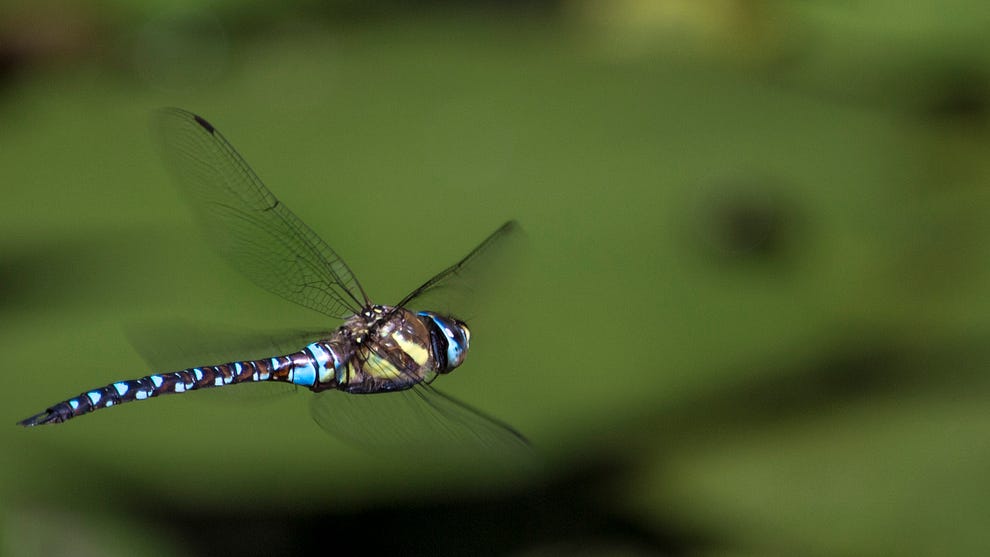
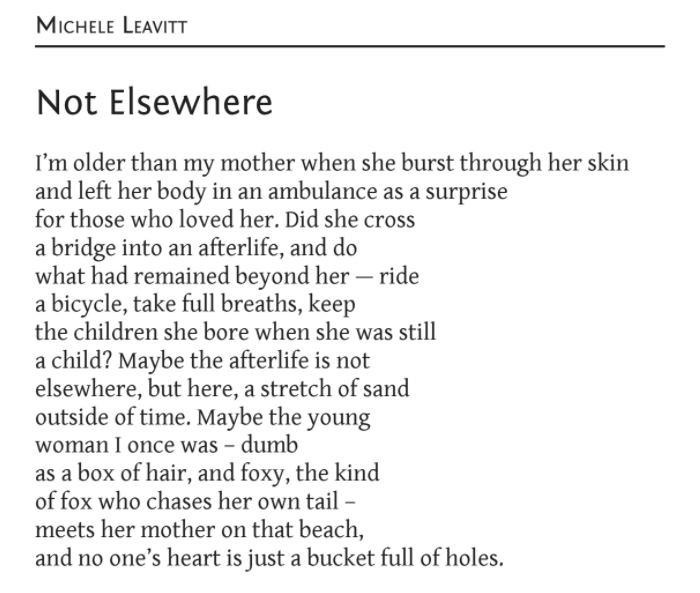
One old wives’ tale that I heard as a child was that dragonflies (or flying needles as they were sometimes called) would sew up the mouths of naughty, mouthy little girls. That would have been the little me, who makes an appearance in this poem, originally published in the Fall 2017 issue of Paper Nautilus.
One form for expressing grief in poetry is the elegy. It started in the Classical period of Western history as a form using a metrical pattern called elegiac couplets: the first of two lines in dactylic hexameter and the second line in dactylic pentameter. The subject, originally, was not necessarily grief. To see an example, check out elegiac couplets in English by John Donne .
Today, poets write poems they call elegies that do not follow any formal pattern. Formalists, of course, might say those poems are not elegies at all.
In deep grief, the arc of writing or reading a poem can be a way to come up for air. That is what I was looking for in this poem, originally published in Eclectica magazine.
Elegy for Christina
When you were seven, I took you out too far
into Ogeechee’s deep, seducing current
and swimming back, your bird-claw fingers choked
my neck. I stooped to prayer: please, God, no stupid
accident. We reached the riverbank. I laughed
as if there’d been no danger, so you could
keep on swimming. For years, you kept to the shoreline,
and grew to be the girl we thought would make
it, the one whose gentleness
we praised, the one whose un-
polluted urine her sisters brought
to their probation officers, the one
we thought immune from stupid accidents.
Some days, grief keeps me looking inward,
even when I hear the cranes’ migration,
and I dive back twenty years to swim the river
and hold you in the current, to stop
your transformation into a woman
overdosing, choking on her vomit.
It’s only now I can admit
we reached the riverbank so many years ago
as easily as windblown chaff
because we were the chaff.
The husk you left behind has burned and sent its smoke
into the atmosphere. Trumpets call me to look up.
I don’t expect the angels. Sandhill cranes
arrow over pine barrens toward the open prairie, lifted
on prevailing winds, following the one way clear to them.
Leaves of the same size and shape arranged together. Photo by Erol Ahmedon Unsplash
All formal poetry employs some form of repetition. Human beings have an natural affinity for repetition. Our world, of course, repeats the cycle of the seasons and the cycle of sunrise and sunset. The first sound we ever hear is our mother’s heart beating in a predictable, repetitive rhythm. We like to hear the same songs and stories over and over again.
Maybe it’s my affinity for repetition that leads me to make the same mistakes over and over again!
Sestinas don’t have to repeat a rhythm or meter or rhyme scheme. They only need to repeat the same end-words in six stanzas of six lines each, and then include the six end words in a three-line envoi at the end of the poem. It sounds easier than adhering to a strict meter and rhyme pattern, but I agree with a poet-friend who said “the sestina is the road to insanity.” Try it at your peril.
Here’s one that was published earlier this year in Stirring. The repeated words are killing, understand, might, case, keep, and manage. You can give yourself more flexibility with this form if you choose words that have more than one meaning. The sestinaform seemed to fit my subject: scientific experiments which seek to create a reproducible result. This issue of Stirring was edited by Caseyrenee Lopez.
Destructive Sampling
We do it in 10×10 meter plots, killing
the hemlocks to understand
what loss and succession might
look like, in case
the wooly adelgid keeps
advancing north. Will we manage
the loss the way we manage
these plots, in incremements — killing
slowly, girdling tree trunks to keep
the sap from rising up? Will we understand
what makes each tree’s case
unique? One girdled hemlock might
die over winter, another might
hang on for years, or even manage
grim survival. They run on tree-time, a case
of willingness to wait. Killing
them slowly may help us understand
which life forms will keep
rising up as the hemlocks keep
dying. But how might
we predict any outcome? Under one stand
of hemlocks, we manage
insect collection with pitfall traps and a killing/
preserving solution encased
in plastic. To monitor cases
of deer-browse impact, we keep
exclosures so the deer won’t kill
the regrowth. We create scenarios: we might
lose the south, the north, but manage
the east, the west, as we understand
them now, or seasons as we understand
them. Should someone make the case
that time’s advance prohibits managing
the future, that we can’t keep
up with change? That it’s silly to insist we might
keep the old growth safe, once the killing
insects manage to come north? What might
keep us safe when the world changes? Or help us understand
experiments’ results, in case we keep on killing?
Did I mention my partner is an ecologist? This poem is part of a long argument we’ve had over the years about whether or not science (or any discipline) can predict the future. Relationships, like nature, can be rich fodder for poetry.
Photo of my mother, Theresa Christie, as a teenager. circa 1956.
I never met my mother.
Like many people adopted as infants in the the 20th century, the fact of my adoption was kept secret — from me, from the neighbors, from my teachers. When I was in my 30’s, I found my blood family, but my mother had already passed away.
Poetry is a map of the human heart, a useful tool if you don’t know where a heart came from, what it’s made of, or where it’s going. I map my mother’s heart in my imagination, looking for what she felt about me.
If we’d met, there’s no telling how our relationship may have been twisted by my feelings of abandonment, or her feelings of loss. Sometimes I’m full of regret that I didn’t search for her earlier.
Oher times I wonder if waiting until it was too late spared us both some pain.
The poem below, originally published in Crab Creek Review ( regular submissions open from September 15 through November 15!), is my attempt to imagine this unknown.
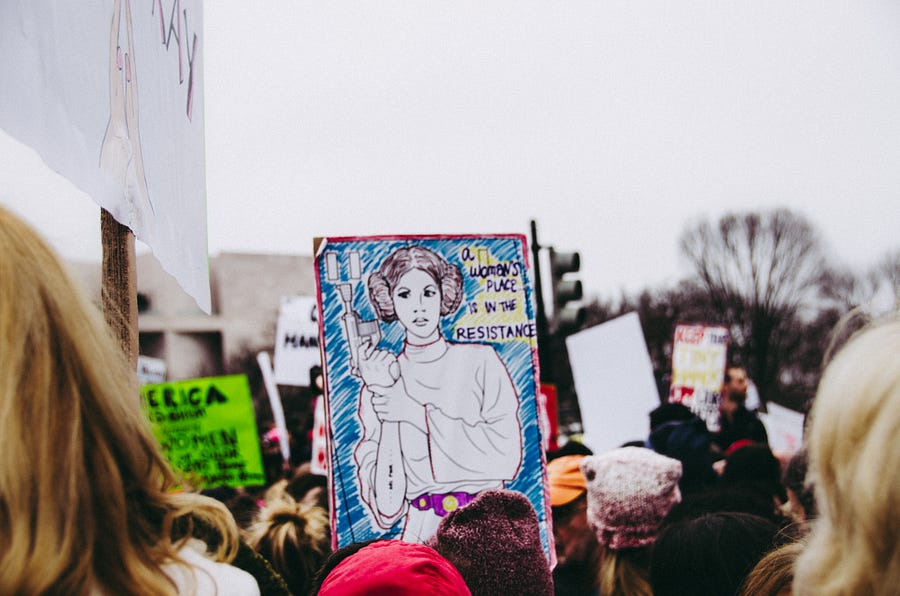
A crowd of protesters, one holding a poster with an image of Princess Leia saying “A woman’s Place Is in the Resistance.” Photo by Jerry Kiesewetter on Unsplash
Political poetry is experiencing a resurgence in Trump-era America, and I’m grateful. It challenges our assumptions and brings us together as we speak and act against the injustices and oppressions of yesterday and today.
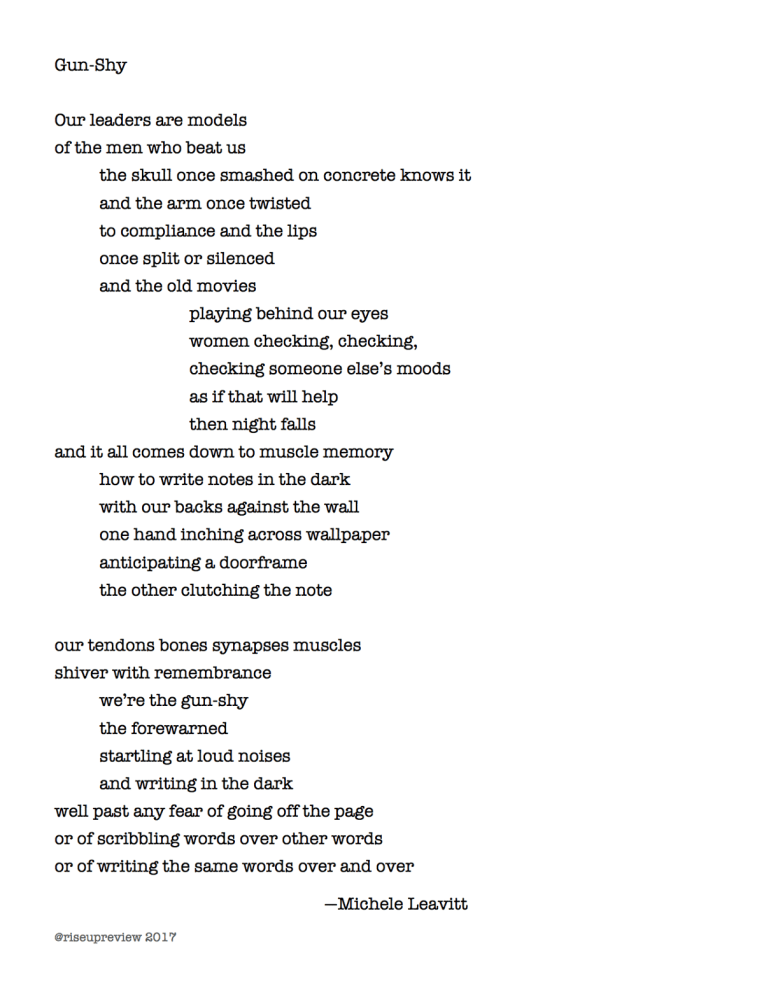
In fact, a few new magazines specializing in political poetry have sprung up since the 2016 election. One is Rise Up Review, edited by poet Sonia Greenfield. I was fortunate to have the following poem published there in 2017. Since then, Greenfield has expanded the magazine, and it features poems in many different styles, on many different topics, from poets around the world.
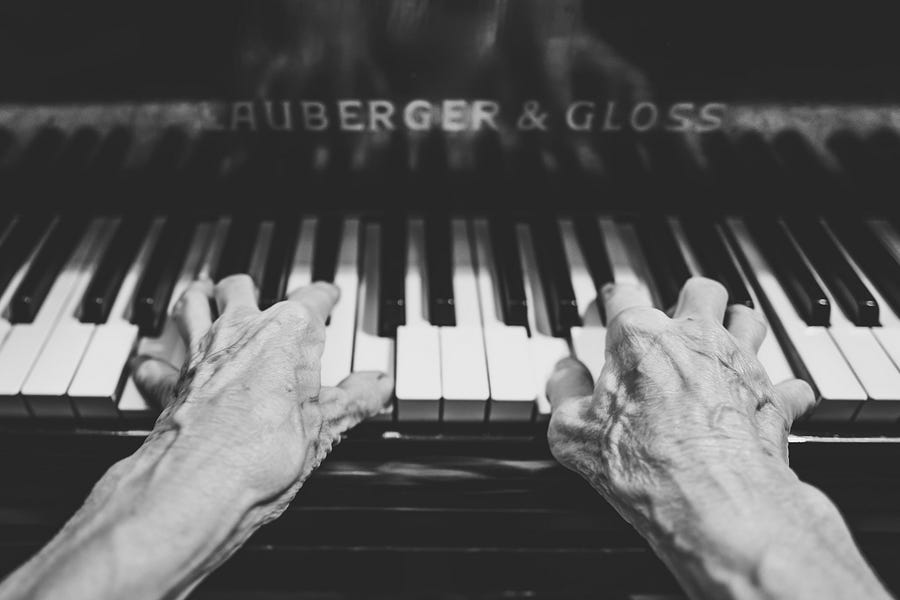
“A black-and-white shot of an elderly person’s hands playing a Lauberger & Gloss piano” by Lukas Budimaier on Unsplash
Wordsworth once defined poetry as “emotion recollected in tranquility.”
I like the idea of re-collecting feelings once they’ve passed, like gathering spent blossoms. It’s a bit gothic.
For me, writing on chronic pain is easier when I’m not actually experiencing it. When I’m in its grip, I’m cranky and selfish..
A research group in Lancaster, U.K. is soliciting poetry and personal narratives on chronic pain to better understand pain from those who experience it. The poem below was published there in 2018, and originally published in the print magazine PoetLore.
“A silhouette of a man holding a smoke bomb on a deserted beach, with a pink sunset sky in the background” by Aziz Acharki on Unsplash
Do dreams have a place in nonfiction?
Since childhood, I’ve had occasional vivid dreams — the kind that are so weird, or colorful, or fantastic that they woke me up. When I started writing poetry (also as a kid), I thought those dreams and their images belonged in poems.
The dreams seemed so meaningful to me. So I wrote.
Later, more than one poetry teacher told me to ditch the dream poems — they didn’t mean anything to anyone but me. The teachers were right: without a context, dream images don’t translate very well for an audience. Of course, if you’re writing only for yourself, that’s different.
But dreams can work well for an audience in fiction and in creative nonfiction writing. They work as long as we make clear that they are, in fact dreams, and connect them to our stories and the people in our stories. I’m not a dream-interpreter, but when people reveal their dreams to me in real life, I feel as if I’ve gotten inside their heads a little. I feel I know them better.
Readers of both fiction and nonfiction want to know the people — or characters — in the stories they read. Reading a good book, we actually crave that knowledge, especially knowledge of a character’s motivations and how those motivations interact with plot. It’s why we stay up past our bedtimes and keep reading. We’re trying to figure out what will happen next.
Some literary theorists believe we read fiction to exercise the part of our brains that guesses at motivations, and that our brains have been programmed by evolution to want to guess at motivations.
Lisa Zunshine, in her book, Why We Read Fiction: Theory of Mind and the Novel, applies this idea specifically to novels, although I believe it can apply to any kind of writing that includes characters. She argues that understanding motivations, and then predicting behavior was an adaptive strategy for early humans seeking to survive and reproduce.
Zunshine’s theory is similar to Finnish psychologist Antti Revonsuo’s theory of dreams. Revonsuo believed that dreams were resulted from the brain practicing for flight-or-flight situations. In other words, our dreams are simulations of stressful situations we might face in real life.
Human beings have long believed dreams are powerful, either as predictors of the future, as revelations of past mysteries, as expressions of repressed wishes. They seem to come with a built-in significance.
For a writer of memoir or nonfiction, relating a dream can help to communicate something about motivation, or obsession, or desire. Instead of telling the reader “I felt trapped in my lifestyle,” I can show the reader how it felt by describing a dream related to that trapped feeling. Here’s an excerpt from one of my essays that attempts to do this:
Night after night, I dreamed of walking under streetlights in Boston, after the bars have closed, when the streets are deserted. I have trouble walking, but not the kind of trouble I had in the dreams of my twenties. In those dreams, my feet were as rigid and heavy as flatirons, and I couldn’t lift them to run away. In these new dreams, I’m drunk and wobbling. The busses have stopped running, and I stumble and curse, desperate to find a way out of Boston that will take me to the North Shore. I have to pee badly. I’m under the Southeast Expressway, surrounded by concrete Jersey barriers and I-beam steel, and there is no one to ask for directions, no taxis, no traffic. The city is silent. Should I walk up onto the expressway if I can find a ramp? Can I walk over the Mystic River Bridge because there are no cars? In the dream, I’m angry that the city is so hard to leave, and I never find the bridge.
In the context of the essay, this dream excerpt demonstrates, perhaps more vividly than reality could, how trapped I felt, and how frustrated. The dream itself may sound familiar to you — dreams about being lost and trying to find a way out of somewhere are common, as are dreams of trying to run with heavy feet. Perhaps they signal some common fear we share as human beings of being stuck in place.
What are some of your favorite examples of dreams in fiction or nonfiction? And what do you think about using dreams in your writing?
If you’ve wondered about the truth of that, I’m happy to report that there’s a boatload of science behind that saying.
In 2005, for example, British researchers found that short periods of “expressive writing” resulted in better physical and psychological health.
Writing about traumatic, stressful or emotional events has been found to result in improvements in both physical and psychological health, in non-clinical and clinical populations.
It makes intuitive sense to me that writing about our tragedies and triumphs can improve our emotional health or bring us peace of mind. But I was surprised at the number of studies showing an impact on physical conditions including rheumatoid arthritis, Epstein-Barr virus, and hypertension.
Most of these studies focused on short, guided periods of expressive writing or guided, written disclosures of trauma. The writing practices were standardized as much as possible in order to achieve some measure of reliability for the studies.
But what is meant by “expressive writing”? In an article for Psychology Today, Dr. John F Evans provides a definition:
It is personal and emotional writing without regard to form or other writing conventions, like spelling, punctuation, and verb agreement. Expressive writing pays no attention to propriety: it simply expresses what is on your mind and in your heart.
This, to me, sounds a lot like the “free writing” technique put forth by teachers from New Age guru Natalie Goldberg to university professor Peter Elbow . Not to mention the thousands (or more) college writing teachers like me who advocated free writing in their classrooms.
The idea behind free writing is that inexperienced writers, or writers who’ve been criticized harshly for things like spelling errors, can sometimes be paralyzed by fear of making mistakes. They can be so fearful that their writing muscles cramp up, or they feel they have “writer’s block.”
The free writing technique aims to remove those fears by de-valuing mechanics like spelling, punctuation, and grammar. The goal in free writing is only for the writer to move thoughts from the brain to the page. And that, after all, is the goal of all writing: translating our thoughts into words.
For writers of memoir or personal essays, putting aside fears of being judged can be the first challenge to overcome. Many turn to free writing as a way of silencing the internal editor — at least temporarily.
Expressive writing may be beneficial to psychological and health, but is it more beneficial to brain health than other kinds of writing? Is there a neurobiological reason why translating thoughts into words, in a judgment-free zone, has a therapeutic effect?
Maybe, but it’s probably related to writing by hand as opposed to typing. The studies I referred to at the beginning of this post don’t mention whether the writing was done by hand or by keyboard. Other studies have shown, though, that writing by hand improves memory and other cognitive functions.
And, a recent study based in India demonstrated that adults learning to read and write (by hand) rewired their brains.
By the end of the study, the team saw significant changes in the brains of the people who had learned to read and write. These individuals showed an increase in brain activity in the cortex, the outermost layer of the brain, which is involved in learning.
Learning to read also seemed to change brain regions that aren’t typically involved in reading, writing or learning. Two regions deep in the brain, in particular, appeared more active after training — portions of the thalamus and the brainstem.
These two regions are known to coordinate information from our senses and our movement, among other things. Both areas made stronger connections to the part of the brain that processes vision after learning to read. The most dramatic changes were seen in those people who progressed the most in their reading and writing skills.
I’ve heard many writers say that writing has saved their lives. Maybe it’s even saved mine. But one thing is certain: our brains need exercise to be healthy, and writing provides it.
Two old journals with blue covers. Photo credit: Michele Leavitt
Old journals and diaries kept during a time in your life you want to write about now can provide raw material for more formal, refined writing.
But even if you weren’t in the habit of spilling your guts out on the page when you kept a journal, a journal can still be useful for detecting certain elements about the character you were in the past, and the settings you inhabited.
“Never throw away anything you’ve written” is advice I’ve given elsewhere. It’s good advice for journals, too, even though they may be an embarrassment.
When I was in my twenties, I destroyed part of a journal written at seventeen.
It embarrassed me. Not because of actions or emotions I confessed in the journal. Because of the voice. I remember thinking it arrogant and overwrought. But I can’t know for sure if the voice was arrogant and overwrought, and I can’t reproduce that voice now because those pages no longer exist.
The most obvious use of a journal or diary for a memoir writer is that a journal can help you fill the blank spots in your memory with details, the sights and sounds of past events in your life. Physical artifacts — the notebooks we used to record our doings — can also spark memories of details. Look at your old handwriting on an old page, feel the smooth paper with your fingertips, and open your mind to memory.
But even for those of us whose old journals are boring and repetitive, finding value in them for a memoir is still possible. An old journal can give you a sense of your voice during the time in question. Were you using youthful slang or professional jargon that you no longer use? Longer or shorter sentences? Odd punctuation like a row of exclamation points or, heaven forbid, a little heart in place of a dot over your “i”? Did you scratch things out, or underline? All these can be keys to your character in the past, and your voice.
The style of the notebook you used can also be telling. It may say something about style or popular colors during the period in question, or it may say something about your personal style back in the day. As an artifact, it can provide a cultural context for your past life.
The two journals in the photo above are from the 1980’s, a time of shoulder pads and cinched waists for women, mullets and Jheri curls for men, glass skyscrapers, glass-top tables, and lots of teal and pink. But these two journals are very plain. In this case, plain didn’t mean cheap; I remember buying the journals at a bookstore near Harvard University. They were quite expensive, and I’ve always been, well, “frugal.” Those two journals-as-artifacts say something about who I was back then, and they also give me a cultural context, even if it’s really an anti-context.
Finally, a third use for old journals and diaries is to find a sensory door in to a larger story. Why did I want that pair of sneakers so badly? Why did my friend and I construct piles of ketchup and salt to dip our french fries in? When that person held my hand too tightly, how did I react?
You may find mysteries, too, like events you wrote about but cannot recall. Yet there they are, in black and white. Or purple and ivory if you had an individual aesthetic.
Being unsure of reality every so often is refreshing. Every mystery is a lesson in human fallibility, something we writers and artists can’t be reminded of too often as we create and re-create reality.






 Michele Sharpe