My dear friend Sandra Lambert planned a birthday party for her wife, Pam, and the date arrived shortly after the 2025 Lammy Awards were announced. At the party, I was still thrilling from the news that Sandra’s essay collection WON A FUCKING LAMMY. The party felt like an episode of the Twilight Zone because no one was talking about her big win. Early on, when only a few guests had arrived, my self-control evaporated and I jumped up and down, yelling SANDRA WON A FUCKING LAMMY!
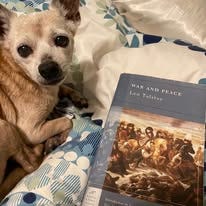
During the rest of my time at the party, I talked about what other people were talking about: the lack of rain, camping, Lucy, the cute middle-aged chihuahua that Sandra and Pam were fostering-to-adopt, and Andrew Fabian, Pomeranian, who is in this photo and is my current super-senior foster dog. He’s also called “Benzo” for his calming effect on humans. He nicely snuggled on my lap part of the time.
Chronic illness and advancing introversion makes parties uncomfortable for me. By the time celebrations were in full swing, it was time for home, sweet home.
But still, no one was talking about Sandra’s Lammy Award. I opened the door to leave quietly, but then shouted “Let me say one thing before I leave: SANDRA WON A FUCKING LAMMY!” Shutting the door, I saw glasses raised and heard universal cheers for Sandra. Finally. Sheesh.
One description that’s been applied to me all my life, in theory as a compliment, is “You’re so laid back.” It’s never set that well with me. Laid back in the grave? Laid back like a pillow princess? Maybe chronic illness has made me appear flat. Inside, I’m a roiling stew of eccentric thoughts, bizarre ideas, and chunks of beloved books.
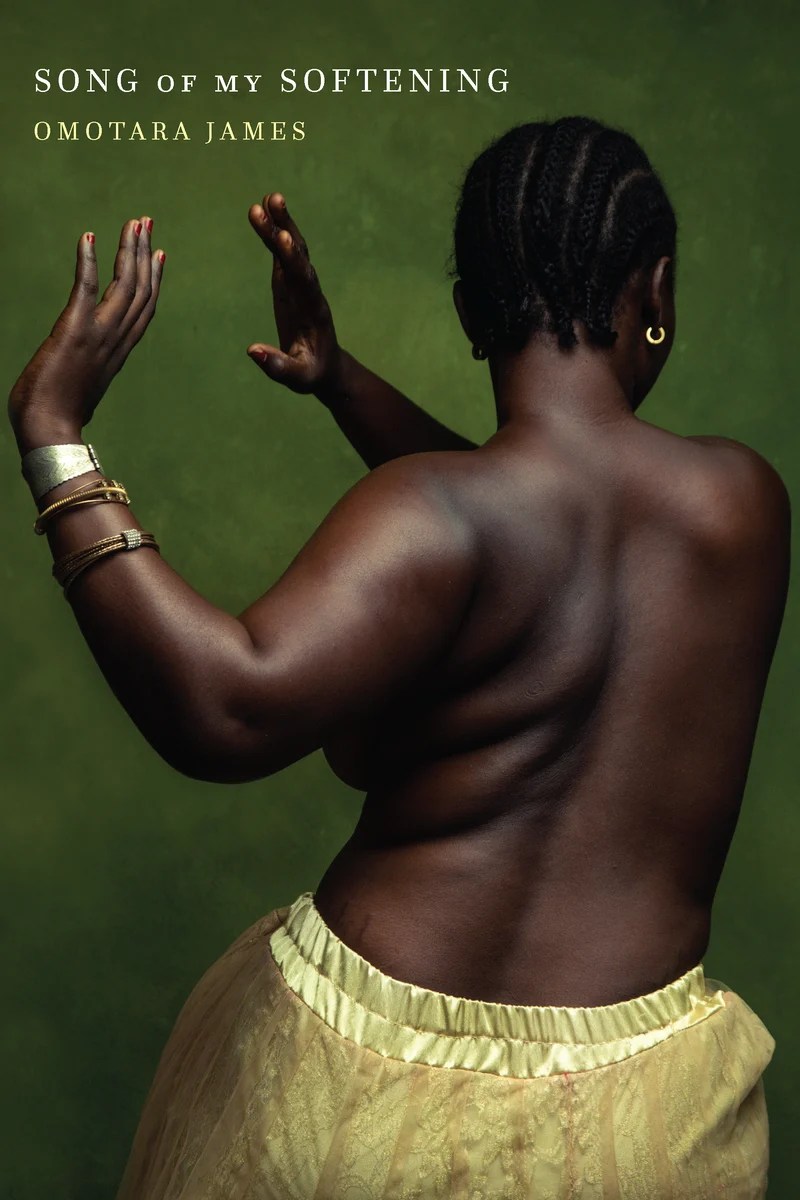
Please celebrate with me! Sandra’s book, My Withered Legs and Other Essayswon first place in lesbian memoir/biography, and Omotara James’ poetry collection, Song of My Softening, won first place in lesbian poetry. I know Omotara from social media and have followed her work for a few years. If I’d been at her wife’s birthday party and no one was talking about her Lammy, I’d have been the same mouthy bitch.
First up, warm praise for a reading method new to me in 2024: slow reading.
Like the slow food movement, slow reading encourages the practice of attentiveness to the moment. I may have achieved dog-consciousness as a slow reader.
As a happy 2024 follower of the Footnotes and Tangents slow read of War and Peace, one chapter a day of this humane novel brought me all the pleasures of a well-plotted story, plus unexpected insights into human nature and history. The book has gobs of contemporary political and emotional relevance, and the international reading community’s commentary and extra info provided by leader Simon Haisell is a treat. For a busy person who wants to maintain a daily reading practice, consider a subscription to one of the many slow read offerings out there on the benevolent side of the internet. I wholly recommend Simon’s several 2025 offerings as he is well-informed about the books he chooses, he has an international following of readers who encourage friendly, diverse discussion of the books, and he is an excellent, reliable manager. I’m participating in the Wolf Hall Trilogy slow read this year.
Here’s some thoughts on the best books I read in the summer of 2024, and the kinds of readers who might appreciate those books.
The most unusual book of the summer for me was How Far the Light Reaches: A Life in Ten Sea Creaturesby queer science journalist Sabrina Imbler, who juxtaposes their own growing up story with the stories of unusual marine organisms. The result is a series of stunning extended metaphors that undulate between the wonders of underwater life and the wonders of human consciousness. An excellent selection for readers who enjoy nature writing, magical metaphors, and the macro-micro entanglement of the big world and the individual psyche.
Double trouble: I read one book — Find Me— by Floridian Laura van den Berg and immediately requested another — State of Paradise — from my library. Both are quirky stories with low-key incorporation of supranatural events. Both books have an original voice, an original premise, and a full-throttle plot, and are great choices for those who love Florida in all its other-worldly diversity.
I’d never heard the name “Miranda July” before picking up All Fours, so the book must have been endorsed by a credible-to-me person somewhere on the benevolent internet. The narrator is perimenopausal, which was its own special delight. The book probably struck me as particularly imaginative because I knew nothing about the author while reading it. The plot is compelling, and the sex scenes are detailed, diverse, and hot, hot, hot. Read this book if you love sex.
Liars by Sarah Manguso was recommended by Lyz Lenz in her crucial yet hilarious stack, Men Yell at Me.I know I stayed up past my bedtime reading Liars because it had a propulsive plot, but I can’t remember a fucking thing about it beyond that. Probably says more about me than about the book. A good choice for those interested in the state of American cis/het marriage and books meant to be read at an astonishing speed.
In her memoir Wishing for Snow, Minrose Gwin writes of growing up with and rediscovering her schizophrenic poet mother, Erin Taylor. Closely observed on internal and external levels, the book is strikingly honest, and it incorporates many of Erin Taylor’s poems. Gwin is new to me, and I’m planning to read more of her graceful work. Read this memoir for the beauty of its language and to know more about mother/daughter relationships, schizophrenia, and poetry.
Consent by Jill Ciment reviews and revises her first memoir, Half a Life. Why? Because the first one didn’t sufficiently interrogate her relationship with and marriage to artist Arnold Mesches. The couple met when Mesches was a 40-something married man with kids and Ciment was his 17-year old art student in a situation that would be described today as sketchy in terms of the power dynamics. Ciment is such an authorial powerhouse in both memoirs, though, that the question of consent is nuanced and perhaps unanswerable. A book for anyone who enjoys or needs the skill of accepting opposing versions of reality.
Jane Satterfield’s phenomenal poetry collection, The Badass Brontës, is a must read (IMHO) for all Brontëphiles. Satterfield writes of her own encounters with Brontë texts, as well as how she imagines interactions among and between sisters Charlotte, Emily, and Anne, both in the past and in a time-optional afterlife. The surprising rhythms of the poems demand attentiveness, like curveballs and reversals in any context do. Perfect for poetry lovers and anyone fascinated by the Brontës.
Jesmyn Ward’s most daring book so far, Let Us Descend, is a book that makes me wish for a long enough life to read everything she will write in the future. It’s daring in the steps it takes into the spirit world, in its visceral detail of the suffering of enslaved people, and in the cascades of inter-related images it uses like a net of jewels to gather the best parts of being human. I read it first in February of 2024 and again over the summer. Everyone should read this book for its power, beauty, and humanity, and, given our in our current world situation, for its combination of cleansing rage and miraculous compassion.
If you like to buck trends, consider reading a memoir, since the powers-that-be never tire of telling us that memoirs are hard to sell. This year, I interviewed two authors with memoirs that came out in 2024, and I recommend both.
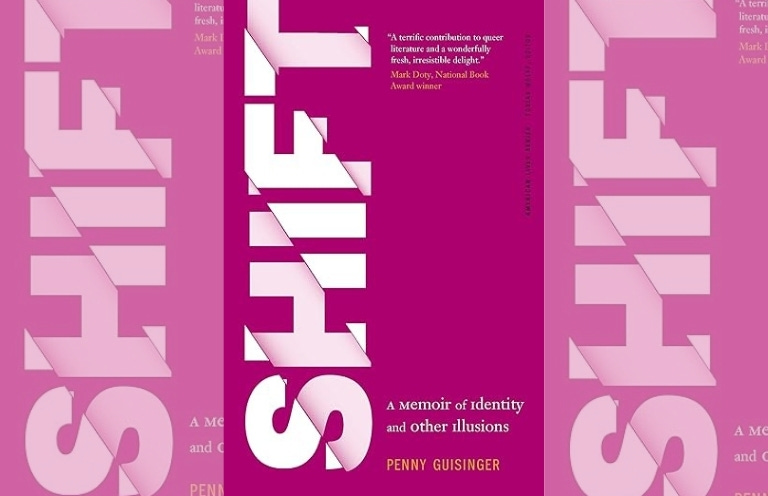
Penny Guisinger’s SHIFT: A Memoir of Identity and Other Illusions explores the power of change in the physical, emotional, and political shifts that occur within (and outside of) the memoir. Gusinger fell in love with a woman in her Downeast Maine community, ended her heterosexual marriage, and continued to parent her two children, who were quite young, and to work in a high stress job. The shifts required to make all this happen are set against the tumultuous context of Maine’s on-again-off-again Marriage Rights saga from 2011 — 2013. It’s also filled with that subtle Maine humor:
“I had a beer bottle wedged into a mesh cup holder hanging below the arm of my chair. I got right to work peeling the label from the exposed section of glass. I stayed on task throughout the conversation.”
Who hasn’t peeled a label off a sweating bottle during a hot, high stakes moment? This understated humor is one of the many elements in SHIFT that captured my heart. The book is also an intellectual treat, examining non-linear time in the context of personal and political “shifts,” including coming out as lesbian.
The book’s haunting relevance to the past decade’s Twilight Zone attacks on individual rights across the United States makes it a must read for understanding the current American political moment. Penny and her wife Kara lived through the approval and subsequent repeal of marriage rights on the state level in Maine. Their courage in managing their personal, family, and professional lives in the shadows cast by the bullshit repeal is just the sort of stubbornness so many of us need now.
SHIFT is a rare confluence of passion, humor, politics, and personal insight. Highly recommend. For more about the book, check out my interview with Penny in CRAFT.
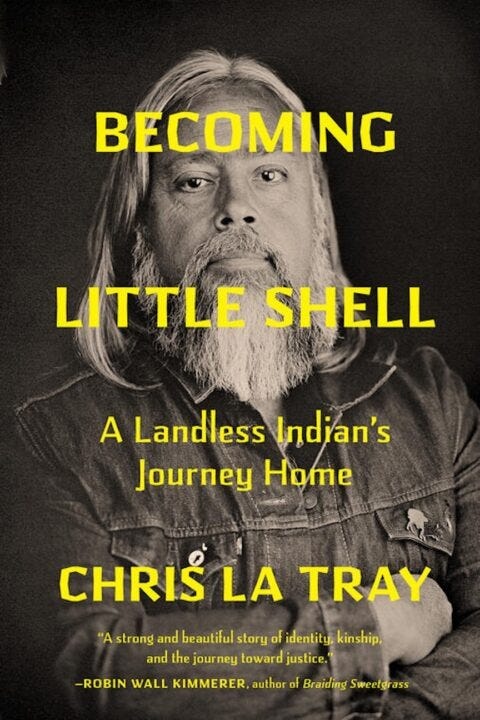
In Chris La Tray’s memoir Becoming Little Shell: A Landless Indian’s Journey Home, the recovery of the Chippewa identity his father hid happens as the Little Shell Tribe of Chippewa Indians endures the long process of achieving Federal restoration. The search for a hidden personal past is juxtaposed with political demands for restoration of a historical past. The memoir’s scale is vast, and readers will come away with insights into Chris’s struggles and the struggles of his tribe, and others, against the colonial violence and machinery of the United States. For more about this remarkable memoir, check out my essay/review for On the Seawall.
There’s much to learn from this book about the many paths resistance may take, about respect for others’ choices, and about the recursive nature of oppression. Plus, the book is a beautiful love poem (Chris is currently the Poet Laureate of Montana) to the High Plains region.
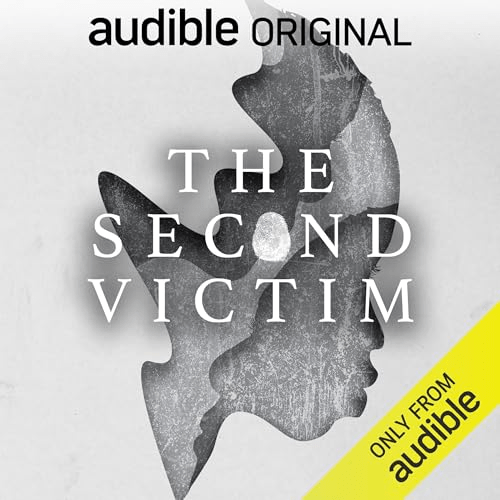
On Rape Conception and the Audible documentary podcast, The Second Victim: Daisy’s Story
Do you remember how difficult it can be to talk about a subject when there’s no language or terminology for your own experience? Or when you’ve not yet found the language? Several years ago, Daisy (she uses this pseudonym to protect the identity of her mother) began posting on Twitter under the username rapeconception, offering necessary terminology for the experience of being conceived by rape. We chatted online, and then over Zoom during the first years of the pandemic, comparing the similarities and differences of our experiences.
My mother was fourteen when she became pregnant with me; Daisy’s was thirteen. We were both put up for adoption, me in the U.S. and Daisy in the U.K. Daisy’s a Black woman who was adopted by a White family, and I’m a 97% White woman adopted by a mixed Jewish and Catholic family — which, believe it or not, was called a “mixed marriage” in the mid-twentieth century.
Our biological fathers were both well into their adulthood at the time of our respective conceptions. In 2015, a DNA genealogist determined mine was one of two brothers, the younger of whom was ten years older than my fourteen-year-old mother. I’ve sent letters and emails to the brother who is still alive. These have gone unanswered. I’ve imagined strolling by his house and asking him about his garden as a way of getting him to talk to me. All I do is imagine; I take no further action.
Daisy’s father was also an adult, much older than her 13-year old mother. It takes a person of courage to bring another person to justice, whether through the law or through a private conversation. I am not that person, but Daisy is. Her activism on behalf of rape-conceived people changed the law in the U.K.
So how many victims are we talking about? The proposals that became Daisy’s Law were inspired by Daisy’s personal experience and activism, but they relied on research and data as well. One study showed that in 2021, for example, between 2,080 and 3,356 people were conceived via rape in England and Wales. This estimate was based on calculations of the likelihood of conception after intercourse in rapes reported to law enforcement.
The limited research on rape conception has shown an increased prevalence of negative developmental and educational outcomes for children conceived by rape. Daisy’s Law now recognizes rape-conceived people as victims in U.K. rape cases and makes victims’ benefits available to them. She tells her story of moving from awareness to activism with courage and compassion in the Audible documentary podcast, The Second Victim, released in November of 2023.
The Second Victim begins with Daisy’s early memories of being a Black girl adopted by a White family and living in a White community in England. At a very young age, Daisy struggles with a sense of disjointedness, the paradox of being singled out and also invisible. When she begins asking questions about her birth parents, she senses another complication, one that’s under the surface of her visible differences from the White people surrounding her, but she doesn’t quite have the language for it yet.
Daisy narrates her own story in her intelligent and expressive voice. She’s joined by people who have been close to her during her search for justice, who add their voices and observations. As someone unfamiliar with podcasts, the listening experience took me a bit by surprise; the added sound effects made the experience more like a film than an audio book by encouraging my brain to visualize conversations and events. Daisy’s story is dramatic in its scope as it tracks her journey through closed doors and roadblocks to find her truth and to achieve some measure of justice and support for people who were born from rape.
Like rape itself, rape conception has long been stigmatized, underreported, and kept a secret. Unveiling the secret brings it into the light of examination, which can benefit everyone. Thank you, Daisy.
It is a truth universally acknowledged that all happy families are alike; each family formed by adoption is unhappy in its own way.” [Apologies to Jane Austen and Leo Tolstoy for the mashup of opening lines from Pride & Prejudice and Anna Karenina.]
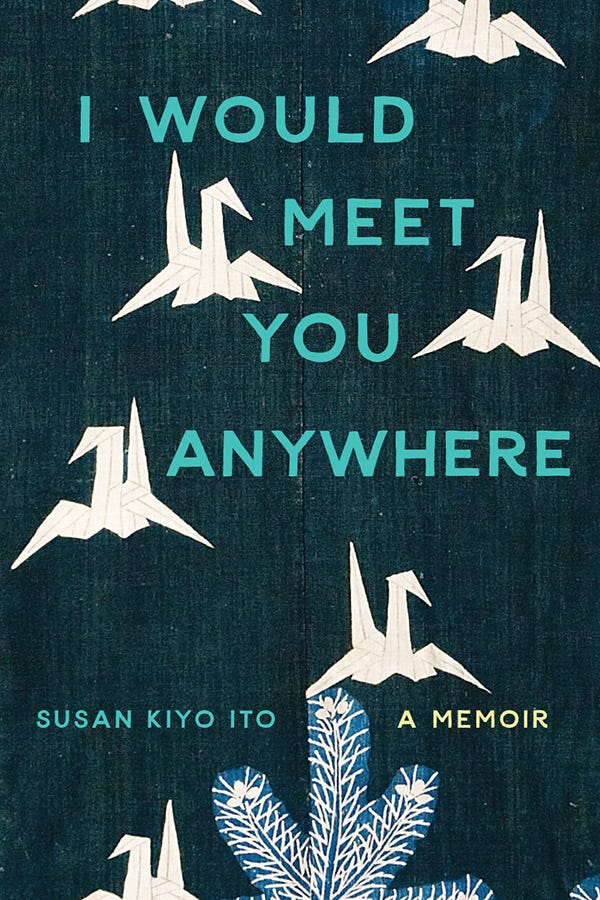
Susan Kiyo Ito’s memoir of her on-again, off-again relationship with her blood mother is a marvel of pacing. Scenes crucial to the narrative are slowed down to the moment-by-moment level of specific gestures, dialogue, interior thoughts, and exterior observations. This strategy allows readers to fully inhabit Susan’s real-time experiences of searching, finding, and accommodating Yumi, the woman who gave birth to her.
Susan’s adoptive parents supported her search for and subsequent relationship with Yumi, and tried to bring everyone in the adoption triad together. What was intended as loving and supportive ironically intensifies questions of family loyalty. During early meetings with Yumi, when Susan is in thrall to the very idea of being near to her own flesh blood, it’s as if she wants their relationship to be private. In aching, honest prose, she describes the awkwardness of feeling pulled toward Yumi and toward her adoptive parents when the four of them meet.
This early, innocent awkwardness is short-lived; it quickly turns into anger, anxiety, and pressure, for Susan’s existence is Yumi’s secret shame. Yumi is married and has two other children who know nothing of Susan. Yumi is anxious to keep the truth from them and everyone in her circle who knows her as a successful wife, mother, and businesswoman. A fragile, intermittent, under-the-radar relationship between Susan and Yumi results from this pressure. Even though Yumi cuts Susan off again and again, Susan keeps welcoming her back when Yumi turns up after years of estrangement as if everything is okay.
Maybe Susan keeps welcoming Yumi back because severing ties is too painful for a woman who who was separated from her mother as an infant. And maybe Yumi cuts Susan off and keeps coming back because it’s too painful for her, too. A survivor of the World War II Japanese internment camps, Yumi was also a survivor of misogynist American culture that shamed unmarried women who became pregnant, and then coerced them into giving up their babies to a predatory adoption industry. Maybe the blood ties between mother and child are so strong they cannot be permanently destroyed, so strong that they can overcome the pressures of culture.
I wouldn’t know. My own mother, fourteen when she became pregnant with me, died one year before my adoption search was successful. I’m childless, too, so the whole mother/child thing is mysterious to me, something I can only learn about from other people’s stories. Susan Kiyo Ito’s memoir I Would Meet You Anywhere is one of those stories: it brims with the contemporary details that translate another’s experiences and embraces the distance needed to interpret those experiences and give them meaning.
Tolstoy knew that on the surface at least, a happy family is one that conforms with societal values, like the Ozzie and Harriet family of the 20th century, and the Instagrammable family of the 21st century. A family that’s cobbled together by another family’s loss and grief — what’s usually the second best choice of adoption — is by definition unconforming and “unhappy in its own ways.” Reading about and listening to the experiences of adopted people, told in their own voices, is the only way to understand those unique experiences. And every one of our stories will be different.
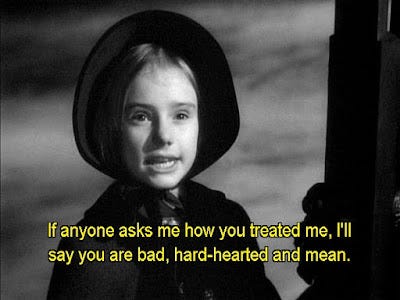
Still shot from 1943 film adaptation of Jane Eyre with text, “If anyone asks me how you treated me, I’ll say you are bad, hard-hearted and mean.”
Down some internet rabbit hole, I saw the title Praying with Jane Eyre: Reflections on Reading as a Sacred Practice. I will read almost anything about Jane Eyre, and when a quick browse revealed that Praying with Jane Eyre was written by Vanessa Zoltan, a Jewish atheist, I was relieved. Fundamentalist religion pasted on top of literature irritates me. On to my library’s database!
I first held Jane Eyre as a chronically ill child confined to bed, a girl who’d read every book in the house and whined for more. My adoptive mother drove to the local library. There, she asked for help from a miraculous but anonymous-to-me librarian who ended up having the most lasting and positive influence on my childhood.
[Please thank a librarian today, especially if you live in a state that’s under pressure from self-righteous book-banning organizations.]
Cover of Praying with Jane Eyre
Praying with Jane Eyre is a combination of memoir, sermon, and literary criticism. I couldn’t stop reading it, even though there’s a bit too much concrete spirituality for me in it, and I disagree with some of Zoltan’s opinions about the novel (the Reeds never deliberately tortured Jane? Please). Still, it’s Jane-adjacent, which I cannot resist, and Zoltan make many meaningful observations about Judaism, Atheism, the epigenetic impacts of the Holocaust (all four of her grandparents were Holocaust survivors), and the process of re-reading. Believing that re-reading can be a sacred act, she has this to say about faith and re-reading:
“what I came to mean by faith was that . . . the more time you spent with the text, the more gifts it would give you.” Even when “you realized it was racist and patriarchal in ways you hadn’t noticed when you were fifteen or twenty or twenty-five, you were still spending sacred time with the book.”
Honestly, I’m not clear on the idea of sacred time. Is it like when I take to the bed all day with a book? Is it like Mary Oliver paying close attention during her morning walks? Or is it about repetition? Or all of these?
Is sacred time forgiveness time? Is it a deliberate disregard for perfection? Most, maybe all, nineteenth century European literature is racist and patriarchal. Charlotte Brontë was not a feminist saint. But her most famous book is more than the sum of her writerly parts, maybe because she trusted in the magic of her unconscious. If she was stuck, as a writer, she asked her own dreams for help and illumination before falling asleep at night.
That’s the quality I most admired about Jane when first reading the book: she trusted her own mind, both the conscious and the unconscious parts. She was self-reliant.
Since childhood, I’ve re-read Jane Eyre yearly. There must have been skipped years, but since my obsession began at eight years old and I’m now sixty-six, I’ve probably read it fifty times. With each re-reading, the world of the novel is somehow made at once new and familiar.
How is it made new? Partly by what I notice. Children are the ultimate underdogs, and as a child, I noticed my own powerlessness as bitterly as Jane notices her powerlessness in the novel. As a teenager in a Karl Marx phase, I noticed the novel’s class struggles. In my early twenties, a second wave feminism phase, I noticed the caging of Bertha Mason.
Time can make a book new, too, if one’s well of compassion for others varies. Imagine my shock during my last re-reading when I felt compassion for the odious Mrs. Reed, that bad, hard-hearted, and mean substitute parent. Before that, even when my beloved Jane insisted on compassion for Mrs. Reed, I’d resisted. A year has passed, only a year, but I feel exponentially older and crabbier. I expect to have the pleasure of detesting Mrs. Reed again soon. It’s time.
In 2024, I’ll be joining a slow-read re-reading of War and Peace, a book I haven’t read for . . . let’s just say decades since I can’t recall exactly. Organized and hosted by Simon Haisell on Footnotes and Tangents, this will be my first experience of a slow-read and a communal internet read.
Maybe next summer I’ll host a slow read of Jane Eyre. Meanwhile I recommend the Rosenbach Museum’s free and streaming series “Sundays with Jane Eyre,” which covers satisfying chunks of the novel via discussions with Eyreheads from around the world.
July, the month when the Americans with Disabilities Act, or ADA, was passed, is Disability Pride Month. Today, it’s not July, but every month is an opportunity to honor the history, achievements, experiences, and struggles of the disability community. Things many of us expect (sort of) now, like accessible public buildings and public transportation, only came about thanks to the tenacious activism of people with disabilities and their allies.
Sandra’s memoir, A Certain Loneliness, published by University of Nebraska, is a classic text about growing up disabled. As an “old polio,” a person who contracted polio during the mid-twentieth century epidemic, growing into her adult identity as a disabled lesbian, she learns how disability can become more complex as we age. With the focus on the body personal and the body politic you might anticipate in a book from Sandra if you’ve read any of her fine essays, this memoir resonates with joy, even as it sometimes burrows into pain and frustration with forces that work against community. It contains some of the most eloquent, visceral descriptions of chronic pain I’ve ever read. Having access to her rendering of her arm and shoulder pain (think of hauling yourself around on crutches for decades) and the deadening fatigue of continuing to work as a book seller through that pain was analgesic for me when I struggled with chronic pain while working a desk job.
But wait, there’s more! Sandra recently published an environmental thriller on her Substack and as an ebook. The Sacrifice Zoneis a wholly original page-turner that’s kept me up past my bedtime. Set in Georgia and Florida, the main character, Vicky Jean to her family and Vic to others, is a journalist who comes from a family attached to their coastal Florida environment in deep and sometimes disturbing ways. When a nuclear plant near her family home explodes, releasing a deadly toxin, Vic is in Washington DC in her first media job out of college. Told that her whole family has been wiped off the map, she doubles down on investigating the explosion, the toxin, and the chaos that follows. Something isn’t right, and it never was.
And still more! In March, 2024, University of Georgia will publish Sandra’s essay collection, My Withered Legs. The title, in case you’re wondering, is both ironic and sarcastic; it was a phrase tossed at Sandra by a long ago editor who thought she needed to describe how her legs look. The editor didn’t know what Sandra’s legs looked like, but still felt free to offer the phrase “withered legs,” a description the editor imagined on their own. Well, some people think they know what it’s like to be other people without even asking.
Thank the stars for reading, which does allow us to experience at least a smidgen of another person’s life if we can forego varnishing it with our own expectations. My Withered Legs is now available for pre-order from the University of Georgia press, and online outlets including Barnes & Noble and Amazon.
Have there always been mean girls, or was that an invention of the 1990’s? Based on my reading habits, I’d say the mean girls have been with us for centuries, from Becky Sharp (no relation!) to the Heathers in Daniel Waters’ film of the same name to Regina George in Tina Fey’s film, Mean Girls.
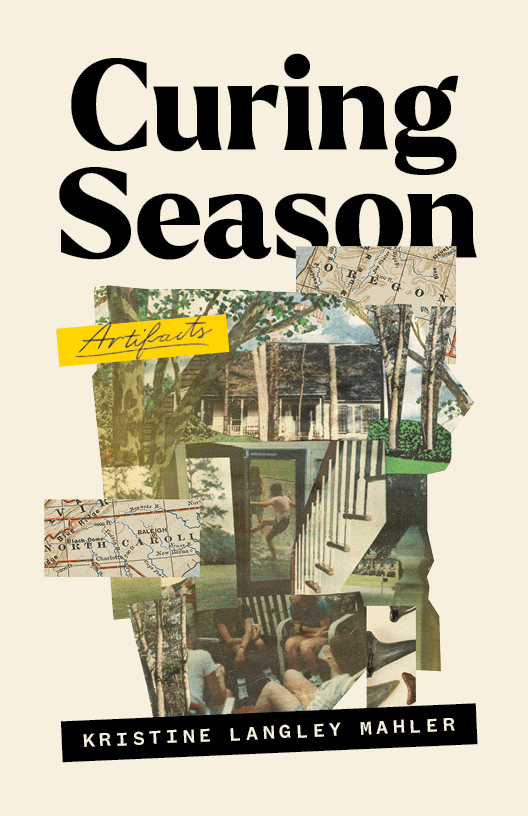
Kristine Langley Mahler’s essay collection, Curing Season: Artifacts offers an exhumation, an exorcism, and a bit of anodyne in response to questions of whether people can recover from toxic, obsessive friendships, and whether those of us who’ve felt out of place can find ourselves at home.
Forced to move with her parents from an idealized Oregon to the foreign country of the Deep South, Kristine’s journey through adolescence is complicated by the difficulty of breaking into an established brood of upper middle class, middle school girls. Worse, on visits back to Oregon, her old friends have changed. Some people don’t remember her, but she remembers her life, past and present, in shining and precise detail.
This skill (or inborn talent) ends up giving her the tools she needs to write these essays: a deep understanding of how details fit together to form meaning, of how artifacts reinforce memory and reality, of how relationships, and the stories we tell ourselves about them, both leave marks.
Praised for its masterful inventions in essay form, Curing Season is often as intriguing in its formatting as it is in its narrative. It’s written in such a diversity of forms, the figuring out of each essay’s pattern is as pleasurable as solving a puzzle. The essay “Creepsake” employs my favorite form of the collection: making up a word, and then writing narrative definitions of the word. So cool and inventive! Here’s an excerpt:
Creepsake
a memento growing along a wall, like a vine
I left things behind, fetishes tied around the fences I wanted to infiltrate. I pushed my copy of The Baby-Sitters Club Super Special #1 under the dust ruffle of Heather’s bed after a sleepover . . . I thought my “misplaced” belongings would be magnets, inexorably pulling relationships back to me . . .
Available from the publisher, WVU Press and the usual suspects.
Danielle Geller shares her efforts to reclaim her mother in a quiet, yet powerful voice that’s substantially free of retrospective editorializing. For readers who want to learn a life lesson along with the memoirist, this absence of “and now I know” observations may disappoint. For me, it was refreshing to read a memoir that kept that sort of clutter out of a story. Geller’s mother leaves her home on the Navajo reservation at nineteen, marries Geller’s father, and has three daughters. Alcohol takes over her life and she’s unable to care for her children; Geller grows up with one sister and their paternal grandmother. She has little contact with her mother and none with her mother’s family, and when her mother dies, Geller gradually takes steps to understand her mother, her mother’s family, and her mother’s culture. Her search for a true image of her mother has universal elements beyond the personal details of her story. Adoptees, foster care survivors, and others separated from their mothers as children will recognize the complexities of a child’s feelings toward an absent mother, how one carries those feelings into adulthood, the drive to connect with blood relatives, and how family separation creates generational loss. As an adoptee in reunion with my maternal family, Geller’s words rang true. As a writer and reader, I was swept up in the story, the structure, the imagery, and the wisdom. Looking forward to Danielle Geller’s next book.
The world, and especially the U.S., needs more #adopteevoices.
The U.S. adoption industry operates now and historically as a money machine rife with corruption, misogyny, oppression, racism, and exploitation. All of these institutional characteristics work to silence adoptees. So when a book by an adoptee gets released, I celebrate!
Cover of Cleave
Cleave is a poetry collection of magnitude and fascination. I started reading it one evening after dinner and stayed up late with it, still reading. As one critic notes, “With breathtaking lyric beauty and formidable formal range, Nobile details the intimate effects of the international adoption industrial complex on children and parents caught up in a system’s unrelenting hunger. This is a book of remarkable compassion and real horror. Its stories will be news to many and all too familiar to others.”
I’m a domestic adoptee, and Tiana Nobile identifies as a Korean American adoptee, so there are important distinctions in our two experiences of adoption, but her stories are “all too familiar” to me.” Most, perhaps all, people who are adopted by strangers experience feelings of loss, alienation, of not fitting in.
Adoption doesn’t exist in a vacuum. The adoptee experience of loss and alienation can be exacerbated in transnational and transracial adoptions in a country like the U.S., where racism and anti-immigrant hate poison communities, families, and individuals. Tiana Nobile’s poems place a personal experience of adoption in that wider community and in a historical continuum. This is a critical book for critical times.
It’s also an aesthetically rich book, full of sensory delight in language and provocative use of many traditional elements of poetry like internal rhyme, organic form, alliteration, and startling imagery.
The poems in Cleave make expert use of a wide variety of intriguing formats. For example, in “Where Are You Really From?” Nobile employs a prose poem format that’s a list of place names in the U.S. that create a mystery narrative — one that illuminates the the empty past of people separated from family, culture, language, and history. A series of poems titled “Abstract” begin with white space, illustrating the absence of knowledge. The famous “monkey love” science experiments that separated newborn monkeys from their mothers is a recurring source of images.
Many of the poems mine science (or pseudo-science) for information on the mother-infant bond and details about fetal and infant development, a technique shared by the writer of the second book discussed here. Nobile’s poem, “Lost First Languages Leave Permanent Mark on The Brain, New Study Reveals,” uses this headline format to to introduce a meditation on what is lost:
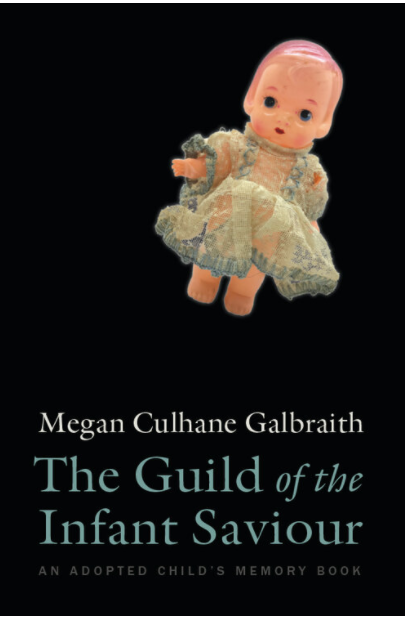
Megan Culhane Galbraith‘s genre-bending book, The Guild of the Infant Savior also kept me reading late into the night. I finished this 300 page collection of essays and visual art in two sittings. Galbraith’s artwork consists mainly of compositions of dollhouses and dolls from the 1960’s, the era in which she was born and then adopted. The visuals work in conversation with the text, but also with the history of women and motherhood.
The text often relies on poetic devices like juxtaposition and repetition to create meaning without overt explanation. But there are also plenty of insightful and direct observations about the adopted state, like these:
“As an adopted child, I’d felt like a thing to be played with instead of a person with her own identity.”
“Many pro-life groups use the term proadoption, but I am not their poster child.”
“I continually try on identities and feel like an actor in my own personal theater productions of The Good Child or Don’t Ever Leave Me Again or See, I Am Worthy of [insert here: Love, Kindness, Joy, Pleasure].”
Like Tiana Nobile, Galbraith explores historical and scientific beliefs about maternal separation. Her installations of period doll houses and dolls (photographed for inclusion in the book) re-create a “mothercraft” degree program at Cornell University in the 1960’s that used infants from orphanages as “practice babies” for students. Like the creators of the “monkey love” experiments, the architects of the Domecon program demonstrated a callous disregard for the emotional states of their subjects, in this case human babies who were put under the care of a rotating series of undergraduates. These babies were seen as in need of middle class remediation, and were later adopted anonymously. Galbraith herself was not a “Domecon baby,” but she spent her first five months in foster care wearing a mechanical brace to correct a medical condition before being adopted anonymously. The parallels are apparent.
The Guild of the Infant Savior publishes May 21, 2021. Pre-order the book here
Many thanks to the publisher, Mad Creek Books, for providing an advance review copy.






 Michele Sharpe