Writing Memoir: Touch the Love

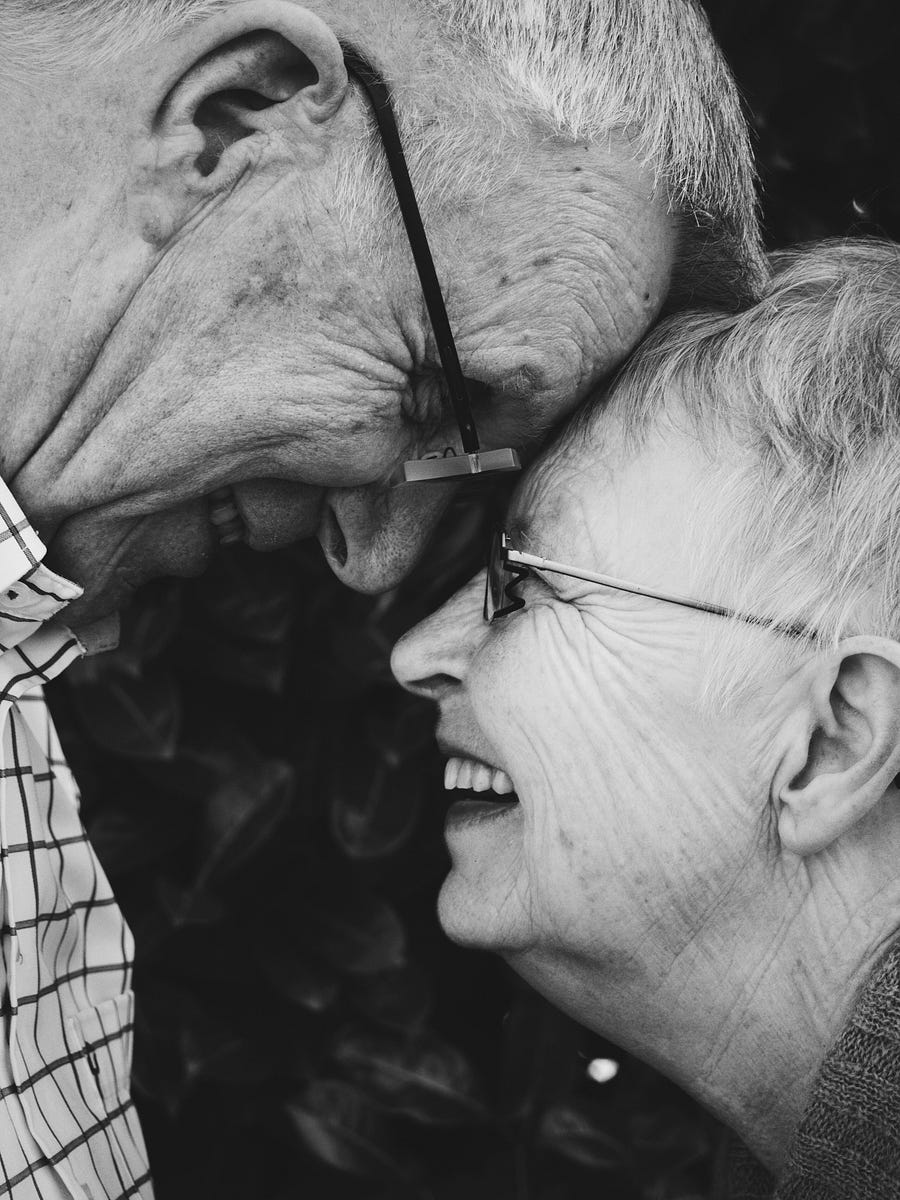
Photo by Anna Kolosyuk on Unsplash

So often, memoir includes writing about other people in our lives. How do we make those others come alive to readers?

I’ve mentioned elsewhere that in writing memoir, we should try to see ourselves as characters who have strengths, weaknesses, motivations. And that’s true for writing about others in our lives, too.

But if you’re like me, not everyone you write about in your memoir is a person you have only good feelings toward. In fact, we might feel resentment, rage, disappointment or even hate toward certain people who appear in our stories.

In my experience, it’s difficult to write well while experiencing negative emotions.

Also, if we write our negative feelings into these unpleasant other characters, two unfortunate things can happen to the memoir:

  • We, the writers, begin to sound unpleasant at best, or full of resentment at worst, both of which will turn most readers off.
  • The unpleasant others come across as one-dimensional, which is boring, especially if they occupy more than a very minor role in the story.

One solution to this difficulty of writing about unpleasant, disappointing, or toxic people is simply this: do not write about them. Cut them out of your story, just as you may have wished to cut them out of your life. You have the power. It’s your story, and no one else’s.

Another solution is to get in touch with the love you feel or felt for the person. See that person in your mind’s eye and imagine your heart opening. See the person as he was as a child. See the person as she was when you loved her most. See the person as a fellow struggler against suffering and despair.

Human relationships are so very complicated, and it’s so very possible to feel both love and hate for one person, even at the same time. And that is never boring.

When I reunited with my birth family nearly thirty years ago, I found I had five brothers and a sister. My brothers all suffered from addiction, and if you know anything about addiction, you know that it’s a family disease. Everyone in the family suffers. My feelings for my brothers were a mix of love, frustration, and even rage, especially when their addictions damaged their children.

Are you feeling bored yet? If not yet, you would become bored soon if I kept on in this vein. And you wouldn’t see my brothers as individuals; they’d become stereotypes.

My youngest brother, David, was the most severely addicted one. Here’s a scene I wrote while trying to touch the love I felt for him, even while he was at his weakest. In the scene, my sister Belinda and I are visiting him in the nursing home he’d been sent to when he was thirty-eight years old.

David’s nursing home allowed patients to smoke in one common room, and in a chain link fenced yard, so we’d bring him cigarettes, too. There was no point in denying him anything he wanted as his life inched toward its certain end, although we didn’t know how quickly that end would come.

I can still see him now in the chain link yard where we went to escape the air conditioning that was too much for all three of us. Wrapped in a thick sweater, he sat beside me and Belinda in his wheelchair with a lit cigarette in one hand, while pawing at Belinda’s arm with his other hand, saying, “Give me a cigarette, Belinda.”

The only thing left besides his restless cravings was his love for his sisters, and his daughter Brandi, and the rest of the family. The diabetes, the heart disease, and the years of active addiction had whittled him hollow, from the inside out.

Other men and women like David inhabited the nursing home, people who should have been in the prime of their lives, but whose brains and muscles and bones and nervous systems had been decimated by chronic drug use and the violence that so often comes with it. I’d expected beds full of frail little old great-grandmas and great-grandpas.

But instead, there were vacant-eyed people in their thirties and forties prowling the hallways like zombies. The man who’d lost a leg to an infection caused when he’d tried too hard to open up a collapsed vein to shoot heroin. The woman whose head had been bashed in by a john when she was out tricking for money for crack. The semi-comatose overdose victims.

An orderly was stationed in the smoking room to prevent fights, and to stop the stronger patients from taking advantage of the weaker ones like David. Belinda worried constantly, and I did too, but this place had been the only one that would take our brother.

When Brandi met us there one day with her newborn daughter Paris, she passed her baby to her father without any wariness. David held his granddaughter, looking at us all with a new wonder in his eyes, stronger than what he greeted me and Belinda with each time we visited as if to say “You came for me, for me, for me.” He cradled the baby gently as his muscle memory resurrected itself and all the fatherly tenderness he’d showered on Brandi returned.

Something in his peripheral vision distracted him, and he reached toward Belinda with one hand while still protecting Paris with his other arm. “I want a grape soda from the machine, Belinda, a grape soda.”

Sugar, and alcohol, and pain pills, and crack cocaine. Love had been enough to relieve him of his cravings for months at a time in the past, to keep him focused on his daughter without falling prey to distractions. But now, love didn’t work for but a few minutes.
Memoir Writing: Tie Your Story to a Significant Issue

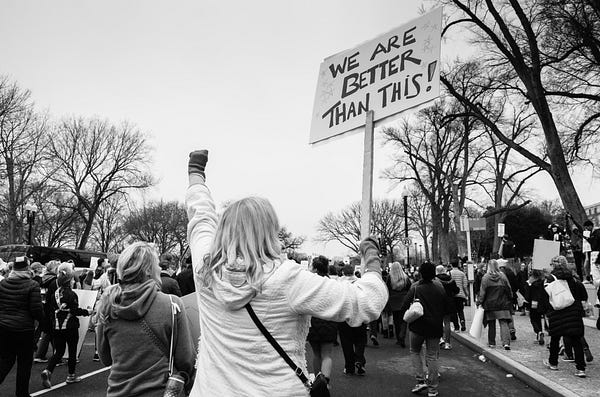
“Black and white photograph of the back view of street protesters in a rally in Washington.” by Jerry Kiesewetter on Unsplash

Why have so many memoirs of recovering from addiction been published in the last fifteen years? I’d say it’s because addiction and recovery are significant issues for many contemporary families. In other words, those memoirs are personal stories touching on a big-picture issue. As such, they become more relatable for people who are concerned about those issues.

In the same way, memoirs about people who survive a serious or chronic illness can give hope to people who are experiencing health-related challenges, or whose loved ones are suffering.

People read memoirs to identify and clarify their own stories, as well as for the beauty of language, the pull of story, or the memorable characters. Touching on significant issues in the context of a personal story helps to alleviate any “me, me, me, it’s all about me!” in a memoir, and it also makes the personal more universal. Or, to quote the second-wave feminist movements, it shows us that the personal is political.

Currently, I’ve divided my memoir draft in three sections. The bigger issue in the first section of my memoir is family separation and reunification. In the second section, it’s addiction’s impact on families. I haven’t figured out what it is in the third section, which so far covers the deaths of many family members, DNA testing, what happens when kids who were in foster care have kids of their own, and mass incarceration in the American prison system, among other things.

Maybe that’s a heads up for me that I’m covering too much ground in that third section.

Or maybe if I choose one significant issue, that can become my organizing principle for the third section.

But because I’ve had editors tell me (sometimes) that I sound like a bossypants, I know there’s a danger for me in deliberately exploring a significant issue in a memoir.

The danger in tying your story to a bigger issue is that you might fall into didacticism, better known as being a bossypants.

And no one likes a bossypants. So let’s say I decide the third section of my memoir is connected to the issue of mass incarceration. It’s tempting for me to haul out my old lawyer identity to argue against mass incarceration using evidence like studies showing how expensive it is, or international comparison statistics.

But my memoir is a personal story, not an editorial. Instead of taking the easy way out by arguing the evidence against mass incarceration, I have to rely on the details of the story.

So let’s see — how am I doing? What are your thoughts about the prison I describe in this scene from an essay about visiting my niece BeeBee at a women’s prison in Florida? Am I being a bossypants?

It was no place like home, but it was a place for families. They sat on metal benches in the processing room, waiting for their loved ones, hoping the next face would be the one they’d longed to see. As if to extend the suspense, the guards released inmates one by one through a gate in a chain-link cage. My niece BeeBee strutted out in a yellow t-shirt and chinos, and I stood up to hug her. 


Like every woman I’ve ever known who’s done time, BeeBee had put on weight. This is usually a good thing; most women who get sentenced to prison have worked their bodies to the bone for drugs. When our hug ended, she stepped back and bounced on the balls of her feet like an athlete. Her thighs were thick with muscle and her arms were round, but her waist was still trim. When she lived on the outside, she’d made a living selling drugs and dancing in strip clubs; in prison, she made her way by winning dance challenges, and by winning fights.


We walked outside to the visiting area in the prison yard. Concrete tables squatted under a roof for shelter from the rain or the hot sun, but we didn’t need protection that day. The sky was clear, and the air was warming, but I already felt locked in and ready to leave.

Across the yard, on the other side of a barbed-wire fence, a massive concrete block building was going up, a construction project that wasn’t visible from the road. BeeBee told me it would be an addition to this women’s prison, and it looked as if it would be ten times as big as the current facility. The grapefruit I had for breakfast congealed in my gut, rose up, and burned my throat, as if I already knew that once construction was completed on this monster, it would rank as the largest women’s prison in the entire country.


Then she started talking about the times when I used to rent a beach house on Tybee Island, near Savannah, Georgia, and our whole family stayed together for a week. In those years, my nieces and nephews — eleven of them — were all children, running wild on the sand, rampaging through the ice cream parlor, and tearing up the rental house. I’d sometimes get the middle-class heebie-jeebies when they were too loud in a restaurant, or too daredevil on a playground, but mostly I sat back and admired their untamed joy.

How about you? What bigger issues do you grapple with in your memoir, whether it’s written or planned or somewhere inbetween?

Writing Memoir: Essay by Essay

Photo by Laura Kapfer on Unsplash
Should you begin writing a memoir as a book-length story, or essay by essay?

After my first memoir was published as a Kindle Single, I reflected a bit about how I wrote it. Originally, that memoir was about my time as a teenage runaway and abuse survivor plus my time as a trial attorney representing a woman who’d survived being shot in the head. First, it was chronological; later, it was braided, alternating between deep past and more recent past.

An Amazon editor saw an essay I’d published in Guernica about my birth family. She asked me if I had anything longer. I sent her the teenage runaway/shooting manuscript. She felt the teenage runaway story was more dramatic than the shot-in-the-head story. Go figure.

She encouraged me to send her a draft of only that story. So, of course, I did.

It had taken me about five years to write that memoir. While that manuscript moved through the editing and publication process, I started imagining a quicker process for writing a full-length memoir about reuniting with my very colorful family. Maybe, I thought, it would be faster to do it in two steps.

First, write individual essays, get them published, and second, slap them together into a book-length memoir. An added benefit of this method was getting pieces of the memoir out in the world right away. Agents and editors like to bet on known quantities — writers who’ve already been published — and I wanted this next memoir published, too.

I was successful with step one; a dozen of those essays have been published in venues including The RumpusNarratively, and Sycamore Review. The very first one to be published found a home three years ago  on Medium in the original incarnation of Human Parts.

But uh-oh. Guess what? It’s been way harder than I thought it would be to mash those essays together into a coherent story. What’s missing is continuity, the glue that holds a story together. But more importantly, in writing those essays, I hadn’t even begun to think about stuff like narrative arc and character development and overarching themes in a book-length story.

If that sounds like a fiction writer’s talk, well, I admit it is. Great memoirs, those that grab a reader and won’t let go, are written like great fiction. IMHO, of course. They focus on story.

Call me a traditionalist: I like a beginning, a middle, and an end. I’ve read some wonderful essay collections, like Leslie Jamison’s The Empathy Exams, that have more than a hint of memoir about them. But I could pick that book up, and put it down, and pick it up again months later.

For me, the most enjoyable reading experiences are the ones that immerse me in a different world with a conflict that begins on page one, gets complicated as I fly through the pages, and comes to a satisfying (or maybe shocking) conclusion near the end.

Now, I’ve got just over 75,000 words of that second memoir written, and I’ve taken a vow to complete the first draft of the whole shooting match by the end of this May. As part of that goal, I plan to blog here every day about some element of memoir craft — especially those elements I need to master.

For me, writing a memoir step by step, one essay at a time, may not have been the time-saver I hoped for. But for other writers, the process has worked quite well, and it might work for you.

We writers are all different, but all writers benefit from knowing their options.

If you’re interested in a thorough discussion of memoir development options and a detailed, diverse analyses of distinctions between essay and memoir and story, I recommend Colin Hosten’s article that includes interviews with some of the top writers and editors in the field.

Write on.

Poetry on Adolescence

Photo by Jordan Whitfield on Unsplash

Many people begin writing poetry during adolescence, a turbulent time of life when we’re wrestling with identity, independence, and desire. That’s a full plate for sure, and no wonder so many young people turn to poetry to try to sort out their feelings and make sense of their place in the world.

As an aside, if you are a young poet (either in age or in your writing career), I have a piece of adviceKeep everything you write. Don’t delete or discard anything. Some of it will probably embarrass you if you look back on it from a more mature perspective, but everything you write is potentially valuable. And, your prior work is also a potential goldmine for later writing projects.

Like many angsty teens, when I started writing, it was to understand my mixed-up thoughts about identity, independence, and desire. What’s interesting to me now, though, as an older person, is the different ways we look back at adolescence.

Some poets, like Claude McKay, have looked back on adolescence as a time of innocence. For Rita Dove, in “Adolescence II,” it seems like a time of magical but frightening transformation. For Adrienne Su, adolescence takes on a broader meaning.

For the following poem on adolescence, originally published in my collection Back East, I considered a memory of one pure afternoon.

Quarry

That volcanic August, the asphalt steamed
behind their older cousin’s El Camino,
a car so hot no one questioned why
it sported a pick-up bed, or why it took
them to skinny-dip at the long- abandoned quarry.

On the path through the woods, they foraged for sex without
knowing it, plucking shapely fungi
and curling moss.
 They came to the water before
it was too late. Years before one lost
an arm to the road and another lost his life
to it, the boys jumped feet first from the cliff,
cupping hands in prayer around their genitalia. 
The flower-power girls dove in before
rapes, abortions, cancers, free-fall naked
without a single consequence, their hands
the points of spades cleaving the mirror.

Treading water, they traded stories of boys
who’d broken their necks and girls who’d disappeared.
The well of rainfall, fluent in the tongue
of silk, praised their barest skin and cooled them.

Poetry on Marriage

“Elderly man and woman touch foreheads in black and white photo” by Lotte Meijer on Unsplash
The rush and blush of a new love often kickstarts the poetic impulse, but it’s so easy to fall into cliché (at least for me) in one of those I-just-fell-in-love poems.

On the other hand, long-term relationships of any type develop complexity as time passes. That complexity creates a depth and richness that can defy cliché, even when writing of a romantic love relationship.

The Academy of American Poets website has an entire section devoted to poems about marriage and partnership, containing dozens of fine poems. Not all of them are happily-ever-after, but as I’ve heard, marriage is not for the faint of heart.

My second husband and I celebrated our tenth anniversary of marriage this year. I am his fourth wife, so between the two of us, we have a good bit of experience! One of the things I love best about him is that he never tries to censor me — a good habit for someone in a marriage or partnership with a writer.

The poem below was originally published in 2017 in Passager, a journal founded in 1990 in Baltimore, Maryland. Passager only publishes work by writers who are at least 50 years old. They put out beautiful issues, and one of the best things for me about turning fifty was that I could finally submit poems to them.

Marriage Bed

Where sleep renders us equally
introspective and inert, equally

irrational and helpless, unaware
of resentments, or mice rustling,

or branches scraping,
or even of the other’s sleeplessness —

each, in wakeful turn, alone with wakefulness
and envy, astonished at the other’s insensibility.

What luck settles the sleepless partner at last?

The knees unbend as if the body has been lifted up
from face-down prayer. The ligaments extend,

the spine lengthens and the body surrenders
to the heft of the quilts,

to the warmth of the other,
to the mesh of breath,

heft and warmth and mesh tied together
in a poultice, drawing restlessness

from that knot between the shoulder blades.
May we meet in sleep again. Helpless. Disburdened.

Poetry in Form: Sonnet

Poetry in Form: Sonnet

“Close-up of a fountain pen writing in a notebook” by Aaron Burden on Unsplash
Sonnets are the very first poetic form many people learn about. The two traditional forms of the sonnet are the Shakespearean (think Shakespeare) and the Petrarchan (think — you guessed it — Petrarch). Both are 14 lines long and include a “volta,” or turn, in the argument or imagery of the poem occuring around line 9, and both are traditionally written in iambic pentameter.

Poetic forms usually rely on repetition. The repetition can be of lines or words in specific patterns, or of a metrical pattern or a rhyme pattern. Like language, though, poetic forms are constantly evolving.

Once the sonnet form was established, poets started stretching it to fit their taste. The twentieth century saw much variation on the sonnet form, but that variation has been going on for centuries. Poets employ varied rhyme schemes, or no rhyme schemes, or change the traditional number of lines, as in the curtal sonnet. Sometimes these are called “nonce sonnets,” nonce meaning a one-off. Of course, once a one-off is created, poets may imitate it.

Two of my favorite contemporary practitioners of the sonnet are Deborah Warren and Natasha Trethewey. The sonnet below, originally published in Mezzo Cammin: an online journal of formalist poetry by women, is my attempt at a Shakespearean sonnet.

Seven-Card Elegy

My father taught me how to play the hand

he dealt. I had to memorize each card

that fell face-up, obey his stern command

to take advantage of the chumps who didn’t guard

against their tells: the finger on the chin

that meant the player filled a Swiss-cheese straight,

the blink that meant a bluff. I learned to win

and lose without expression, to lay in wait.

When Pops had nothing left to teach, he lost

his patience, grew disgusted when I bet

on clearly losing cards, or when I tossed

a winner out. I taught myself to get

up from the table — to play the card of tough

indifference. Then indifference paid enough.