A womanist Take on the “Selfish Artist”

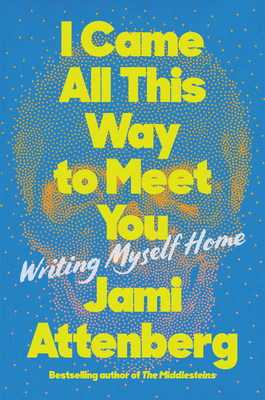
Reading Jami Attenberg’s memoir, I Came All This Way to Meet You, I kept thinking it was unlike any memoir I’d ever read. Above all, it’s a story of increasing dedication to the art of fiction, to an identity as a writer. Everything else is subordinate to her work, and everything else except family and friendships is transitory, even the idea of home.

Many male artists have told a story like this, but Attenberg brings a womanist take to the “selfish artist” trope without relying on some cathartic event to create her identity. Instead, she writes about the logistics of making time and space for her work, of dedication to selling her work, of understanding how she works.

The book hops around in time, but I found this pleasing along with the reflective bits toward the end where Attenberg tries to understand some of her less-than-happy behaviors.
Many thanks to NetGalley for an advance review copy. (less)

Sandra Gail Lambert

Jessica’s clone comes calling in this fast-paced story of nature, nurture, and survival.

Keily Blair's avatarSignal Mountain Review - Volume V, Issue I

Split Thread

White, neon light splatters over the windshield of the spacecraft. Although Jessica knows it can’t be called a windshield. There is no wind in space. Maybe there is. Earthbound, previously earthbound, Jessica is uncertain. Gayle43 reaches over and yanks on her harness until Jessica snaps tight against what should have been the co-pilot’s seat. But he is knocked out and stacked in a utility closet, along with the pilot, at the spaceport just outside Titusville which is forty miles down the Florida coast from Jessica’s home, which she will never be able to return to.

“Don’t touch anything.”

Gayle43 goes back to staring at the control panel in front of them. Lights blink, an alarm sounds, and Gayle43 punches buttons too fast for Jessica to follow. But not superpower fast. Does her clone have superpowers? The little craft twists sideways in quick loops. Streams of light crisscross in…

View original post 2,977 more words

Heathcliff’s Lost Years

Ill Will by Michael Stewart

My rating: 5 of 5 stars


I sought out this book, which imagines the “lost years” spent by the Wuthering Heights character Heathcliff, after hearing Michael Stewart speak on the one of the “Sundays with Jane Eyre” broadcasts done by the Rosenbach Museum (excellent series, highly recommend for fans of JE). I was taken with Stewart’s ideas about how class issues function in JE and appreciated his perspective as a working class person, so I was interested to see how he would write about Heathcliff, who must be one of the most controversial characters in British fiction.
The book far exceeded my expectations. Stewart invests Heathcliff with complex motives that derive from a complex history, including an authentic (I’m an adoptee) representation of adoption as trauma in Heathcliff’s yearning and confusion towards the mother he cannot recall. The novel is also rich in period detail about class and race oppression. Stewart doesn’t turn away from ugly truths.
TBH, I wasn’t optimistic about the novel. I don’t read many books by male authors, as their assumptions about women often irritate me, I’m not into fan fiction, and I hold the work of the Brontes sacrosanct. Every year, since I was 8 years old, I’ve (re)read at least one Bronte novel, usually Jane Eyre or Wuthering Heights. I’ll turn 65 this year, so that’s a lot of re-reads. Nevertheless, Stewart’s novel expanded my thinking about Wuthering Heights.


View all my reviews

Two new poems at mezzo cammin

Form is repetition

I think this is my seventh appearance in Mezzo Cammin: An Online Journal of Formalist Poetry by Women. The journal was founded in 2006 by Kim Bridgford, a brilliant poet, teacher, and critic who took every opportunity to support women poets. Tragically, she died in 2020 after struggling against cancer, but her colleagues keep her legacy alive by continuing to publish Mezzo Cammin.

Kim helped me and countless others to be a better poet by encouraging, critiquing, and publishing our work. Her own work, often written in traditional forms, is stunning for its mastery of tradition combined with incisive, contemporary political commentary, as in these lines from “Why Sisyphus Isn’t a Woman” :

Because it wouldn’t be mythological,
Just life. What woman hasn’t pushed a rock,
Or two or ten? It’s not an obstacle,
But a way of navigating. No shock.
Instead, it’s the efficient way to push
While also writing a book or raising a child.

The two poems I have in the current issue of Mezzo Cammin are both formal and experimental for me. The first, “Lost Ring,” is in the duplex form invented by Jericho Brown. Can we call something a traditional form if it was created in the 21st century?

The second poem, “How to Divorce” is intended as humorous, a departure for me and my usually grim outlook. Well, I guess divorce is kinda grim, right?

Check out both poems, and the fabulous poets who also appear in this issue, by clicking here.

Legalize Infant Abandonment? No Thanks.

Baby wearing a frilly outfit sitting in a barrel

But big thanks to Marley Greiner for all the work she does to advance adoptee rights and to keep us informed about “Safe Haven Baby Box” efforts across the U.S.A.

These boxes are, first of all, not necessary. Babies aren’t being deposited left and right on people’s doorsteps or park benches because their mothers can’t stand the shame of giving birth. Offering a “Safe Haven Baby Box” option would be completely silly — if it didn’t undercut adoptees’ rights to their original birth certificates. And Marley explains that much better than I do. Follow her at the Daily Bastardette.

Tell Your Local Officials How to End Police Violence

A sample letter to send off today

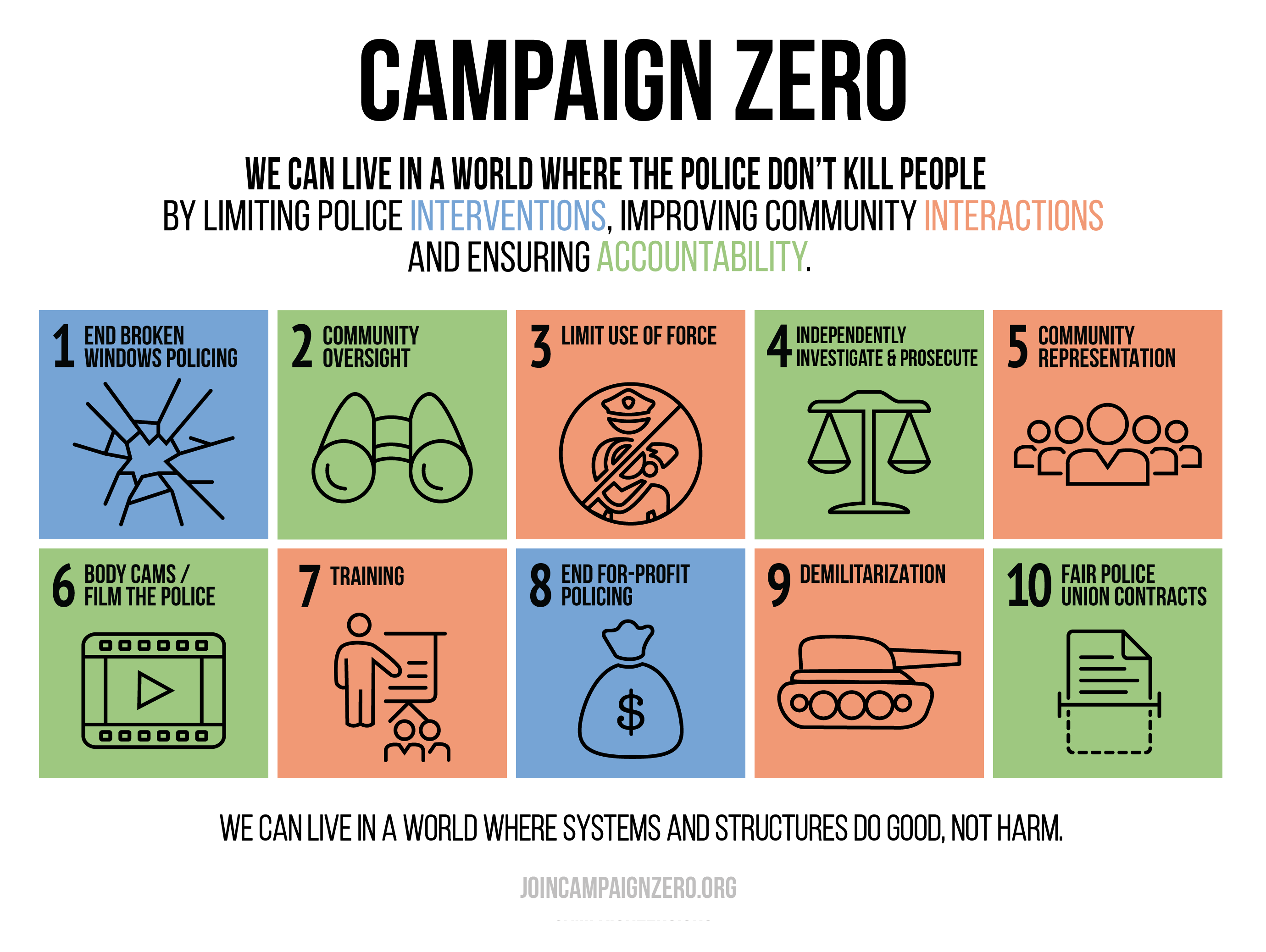
Campaign Zero graphic representing 8 strategies for ending police violence

Police departments, sheriff’s offices, state troopers and highway patrol offices are administered at the municipal, county, or state level. Making detailed changes locally is often a swifter process than trying to change things at a national level. Goals like #prisonabolition and #policeabolition can’t be achieved overnight. If you want to work toward ending police violence, try starting locally.

To have an impact locally, let your elected officials know your thoughts. Click here for a draft email or letter to elected officials with a number of alternatives laid out. Feel free to copy, share, change, ignore, or adapt for another type of audience. And check out www.joincampaignzero.org for more ideas!

Why Restaurant Workers Aren’t Going Back

Spoiler: it’s not because they are getting unemployment checks.

Bartender lining up glasses of beer
Photo by Proriat Hospitality on Unsplash

Working as a server or bartender is hard work. Like retail work, you have to smile while putting up with rude or demanding customers. Back when I was a bartender, one irate customer spat his false teeth at me.

Also like retail workers, you aren’t paid well. In fact, in most states you’re paid far less than minimum wage. Servers rely on tips to make up the difference.

Here’s a “friend link” to the rest of the story

Searching for a True Image

Dog Flowers by Danielle Geller
Book Cover of Danielle Geller’s memoir, DOG FLOWERS

Dog Flowers: A Memoir by Danielle Geller

My rating: 5 of 5 stars


Danielle Geller shares her efforts to reclaim her mother in a quiet, yet powerful voice that’s substantially free of retrospective editorializing. For readers who want to learn a life lesson along with the memoirist, this absence of “and now I know” observations may disappoint. For me, it was refreshing to read a memoir that kept that sort of clutter out of a story.
Geller’s mother leaves her home on the Navajo reservation at nineteen, marries Geller’s father, and has three daughters. Alcohol takes over her life and she’s unable to care for her children; Geller grows up with one sister and their paternal grandmother. She has little contact with her mother and none with her mother’s family, and when her mother dies, Geller gradually takes steps to understand her mother, her mother’s family, and her mother’s culture. Her search for a true image of her mother has universal elements beyond the personal details of her story. Adoptees, foster care survivors, and others separated from their mothers as children will recognize the complexities of a child’s feelings toward an absent mother, how one carries those feelings into adulthood, the drive to connect with blood relatives, and how family separation creates generational loss. As an adoptee in reunion with my maternal family, Geller’s words rang true. As a writer and reader, I was swept up in the story, the structure, the imagery, and the wisdom. Looking forward to Danielle Geller’s next book.


View all my Goodreads reviews