Re-reading as Prayer

2. Jane Eyre

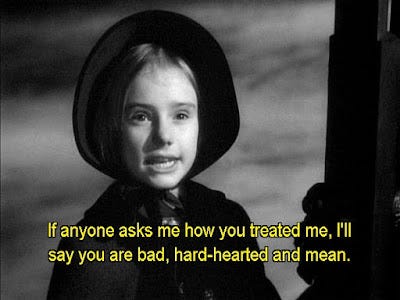
Still shot from 1943 film adaptation of Jane Eyre with text, “If anyone asks me how you treated me, I’ll say you are bad, hard-hearted and mean.”

Down some internet rabbit hole, I saw the title Praying with Jane Eyre: Reflections on Reading as a Sacred Practice. I will read almost anything about Jane Eyre, and when a quick browse revealed that Praying with Jane Eyre was written by Vanessa Zoltan, a Jewish atheist, I was relieved. Fundamentalist religion pasted on top of literature irritates me. On to my library’s database!

I first held Jane Eyre as a chronically ill child confined to bed, a girl who’d read every book in the house and whined for more. My adoptive mother drove to the local library. There, she asked for help from a miraculous but anonymous-to-me librarian who ended up having the most lasting and positive influence on my childhood.

[Please thank a librarian today, especially if you live in a state that’s under pressure from self-righteous book-banning organizations.]

Praying with Jane Eyre by Vanessa Zoltan
Cover of Praying with Jane Eyre

Praying with Jane Eyre is a combination of memoir, sermon, and literary criticism. I couldn’t stop reading it, even though there’s a bit too much concrete spirituality for me in it, and I disagree with some of Zoltan’s opinions about the novel (the Reeds never deliberately tortured Jane? Please). Still, it’s Jane-adjacent, which I cannot resist, and Zoltan make many meaningful observations about Judaism, Atheism, the epigenetic impacts of the Holocaust (all four of her grandparents were Holocaust survivors), and the process of re-reading. Believing that re-reading can be a sacred act, she has this to say about faith and re-reading:

“what I came to mean by faith was that . . . the more time you spent with the text, the more gifts it would give you.” Even when “you realized it was racist and patriarchal in ways you hadn’t noticed when you were fifteen or twenty or twenty-five, you were still spending sacred time with the book.”

Honestly, I’m not clear on the idea of sacred time. Is it like when I take to the bed all day with a book? Is it like Mary Oliver paying close attention during her morning walks? Or is it about repetition? Or all of these?

Is sacred time forgiveness time? Is it a deliberate disregard for perfection? Most, maybe all, nineteenth century European literature is racist and patriarchal. Charlotte Brontë was not a feminist saint. But her most famous book is more than the sum of her writerly parts, maybe because she trusted in the magic of her unconscious. If she was stuck, as a writer, she asked her own dreams for help and illumination before falling asleep at night.

That’s the quality I most admired about Jane when first reading the book: she trusted her own mind, both the conscious and the unconscious parts. She was self-reliant.

Since childhood, I’ve re-read Jane Eyre yearly. There must have been skipped years, but since my obsession began at eight years old and I’m now sixty-six, I’ve probably read it fifty times. With each re-reading, the world of the novel is somehow made at once new and familiar.

How is it made new? Partly by what I notice. Children are the ultimate underdogs, and as a child, I noticed my own powerlessness as bitterly as Jane notices her powerlessness in the novel. As a teenager in a Karl Marx phase, I noticed the novel’s class struggles. In my early twenties, a second wave feminism phase, I noticed the caging of Bertha Mason.

Time can make a book new, too, if one’s well of compassion for others varies. Imagine my shock during my last re-reading when I felt compassion for the odious Mrs. Reed, that bad, hard-hearted, and mean substitute parent. Before that, even when my beloved Jane insisted on compassion for Mrs. Reed, I’d resisted. A year has passed, only a year, but I feel exponentially older and crabbier. I expect to have the pleasure of detesting Mrs. Reed again soon. It’s time.

In 2024, I’ll be joining a slow-read re-reading of War and Peace, a book I haven’t read for . . . let’s just say decades since I can’t recall exactly. Organized and hosted by Simon Haisell on Footnotes and Tangents, this will be my first experience of a slow-read and a communal internet read.

Maybe next summer I’ll host a slow read of Jane Eyre. Meanwhile I recommend the Rosenbach Museum’s free and streaming series “Sundays with Jane Eyre,” which covers satisfying chunks of the novel via discussions with Eyreheads from around the world.

New-ish books to celebrate pride month

Every day is a good day to celebrate and envision equality for all, like my little dog Pilot here. In 2023, our Pride celebrations and activism have urgent significance, so this week I’ve chosen three books that celebrate queer survival and joy.

Didn’t Nobody Give a Shit about Carlotta by James Hannaham is set in and out of an upstate prison and Brooklyn in the 1980’s. The book opens as Carlotta, a trans woman, is about to go for a parole hearing after serving most of a 25-year sentence in a men’s prison. Parole is granted and she heads home on a bus. Arriving at the house where she grew up, she walks into an exuberant party with all the food, music, drinks, and dancing anyone could want. But the party isn’t for her homecoming — it’s for a dead man. Carlotta dismisses this mistake, at least on the surface, just as she dismisses any mention of her dead name as she grabs all the life she can on her first day out.

In a brilliant move, Hannaham ditches conventional punctuation and dialogue tags and blends first person and third person narration, allowing Carlotta’s thoughts and perspective to mesh with the voice of a cagey omniscient narrator.

The story and setting brought me back to my time as a public defender who was so often astonished by my clients’ reckless enthusiasm for life, even when life had shat upon them relentlessly. Carlotta is unforgettable.

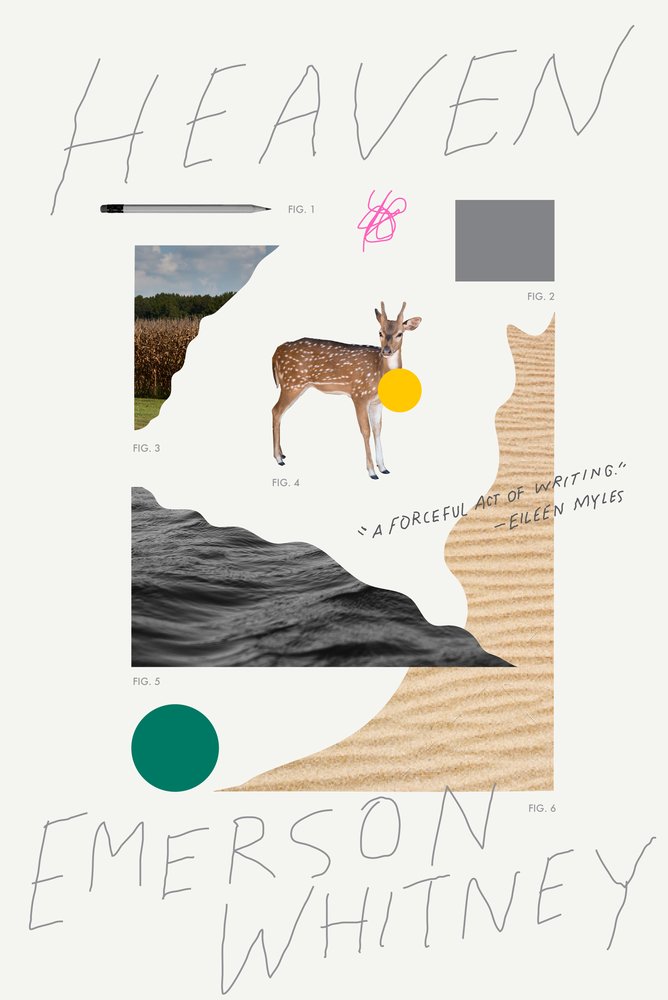
Heaven by Emerson Whitney

I came to this book because I needed more of Emerson Whitney’s writing after reading an advance review copy of their soon-to-be-published memoir, Daddy Boy, which becomes available June 27, 2023. Both books are from the McSweeney’s imprint, and both are literary excursions that draw on queer theory, art theory, and personal experience.

Heaven diagrams Whitney’s complex relationships with their family’s women. The book opens with Whitney re-remembering a story she’d been told about one of their mother’s near-death experiences of getting sober. The two, mother and child, are estranged, but Whitney isn’t here to judge. On the contrary: “Everything I fear in her lives hot inside of me.” Just look at how “hot,” one little word in a little sentence, opens up meaning. This is a short book, but one where you’ll probably highlight or copy down a zillion phrases or sentences. The writing is that good.

When the beloved grandmother asks “do you think you’re like this because your mother loved your brothers more?” Whitney notes that “No one asks about the root causes of heterosexuality or cisgenderism.” This questioning of underlying assumptions is the sort of thing I live for, along with relentless logic. The book is rich in both.

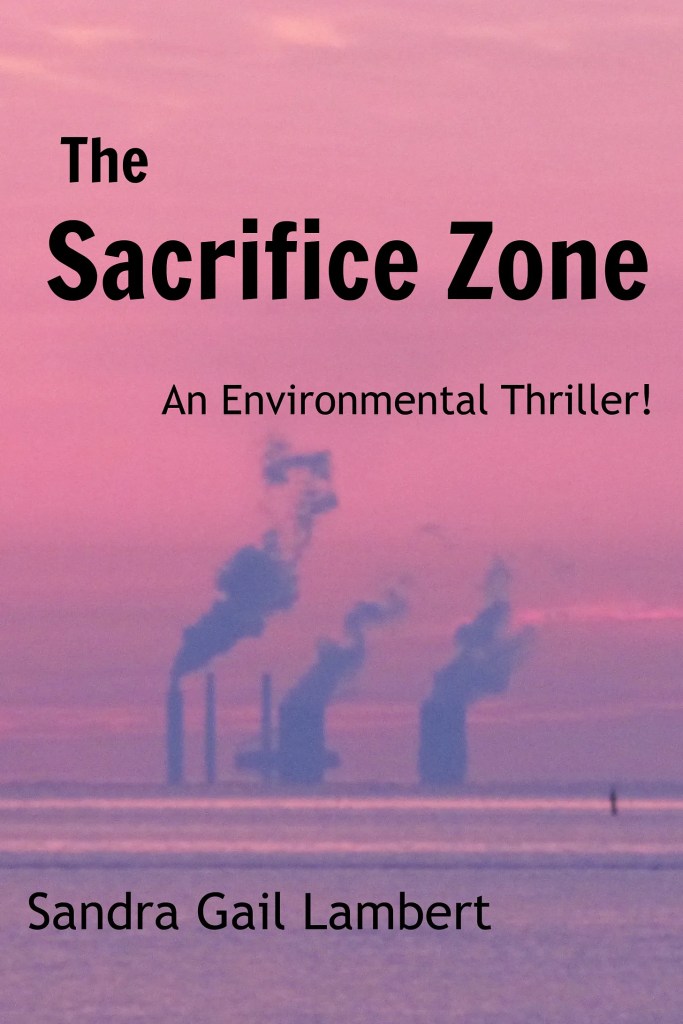
The Sacrifice Zone by Sandra Gail Lambert

Saving the best for last — and fessing up, up front, that author Sandra Lambert is my friend — is The Sacrifice Zone, a cli-fi, sci-fi environmental thriller with wholly unique elements, like one family’s sticky bond with the land they live on between the Gulf of Mexico and a nuclear power plant. Some think it’s a jealous, malevolent bond, one that makes it impossible for the family to leave.

A worldwide environmental disaster unfolds as Vic, the main character, is interning at a newsroom. She’s one of the few members of her family who can tolerate being away from home for long, and she’s different from them in other ways, too. A polio survivor, she uses braces and crutches to propel her through the world, and she’s a visibly butch lesbian.

At her newsroom, she hears and feels a siren going off hundreds of miles away. There’s been an explosion at the nuclear plant near her home, where a new device, “World’s Ease,” was being tested. This new technology, touted as civilization’s great energy solution, turns out to be a weapon. Vic leans into the horror that will change her family, her homeland, and the world, as she and her cameraman inch closer and closer to the truth.

Avalailable as an e-book, or the serialized version on Substack. Oh, and I have three FREE (no credit card required) one-month subscriptions to Lambert’s Substack to give out, which means you can read AND listen to The Sacrifice Zone in addition to her other witty and insightful essays about writing, queerness, disability, publishing, and aging. Send me an email if you want one of those free subscriptions: michelejsharpe (at) gmail
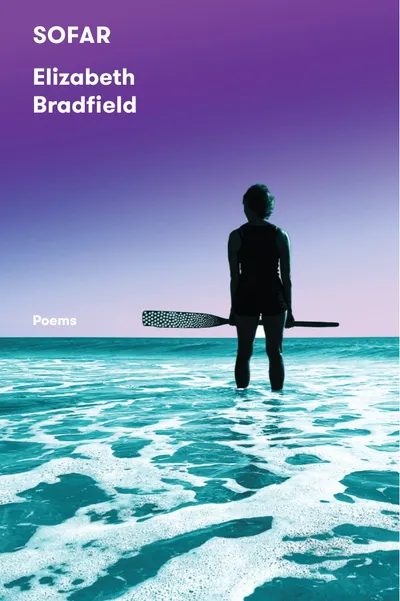
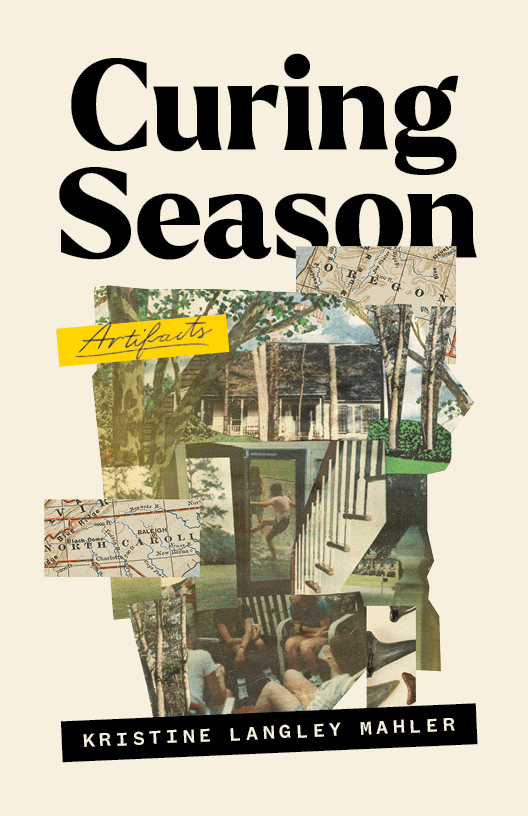
Curing the Mean Girls: A Review of Curing Season

Have there always been mean girls, or was that an invention of the 1990’s? Based on my reading habits, I’d say the mean girls have been with us for centuries, from Becky Sharp (no relation!) to the Heathers in Daniel Waters’ film of the same name to Regina George in Tina Fey’s film, Mean Girls.

Kristine Langley Mahler’s essay collection, Curing Season: Artifacts offers an exhumation, an exorcism, and a bit of anodyne in response to questions of whether people can recover from toxic, obsessive friendships, and whether those of us who’ve felt out of place can find ourselves at home.

Forced to move with her parents from an idealized Oregon to the foreign country of the Deep South, Kristine’s journey through adolescence is complicated by the difficulty of breaking into an established brood of upper middle class, middle school girls. Worse, on visits back to Oregon, her old friends have changed. Some people don’t remember her, but she remembers her life, past and present, in shining and precise detail.

This skill (or inborn talent) ends up giving her the tools she needs to write these essays: a deep understanding of how details fit together to form meaning, of how artifacts reinforce memory and reality, of how relationships, and the stories we tell ourselves about them, both leave marks.

Praised for its masterful inventions in essay form, Curing Season is often as intriguing in its formatting as it is in its narrative. It’s written in such a diversity of forms, the figuring out of each essay’s pattern is as pleasurable as solving a puzzle. The essay “Creepsake” employs my favorite form of the collection: making up a word, and then writing narrative definitions of the word. So cool and inventive! Here’s an excerpt:

Creepsake

  1. a memento growing along a wall, like a vine

I left things behind, fetishes tied around the fences I wanted to infiltrate. I pushed my copy of The Baby-Sitters Club Super Special #1 under the dust ruffle of Heather’s bed after a sleepover . . . I thought my “misplaced” belongings would be magnets, inexorably pulling relationships back to me . . .

Available from the publisher, WVU Press and the usual suspects.

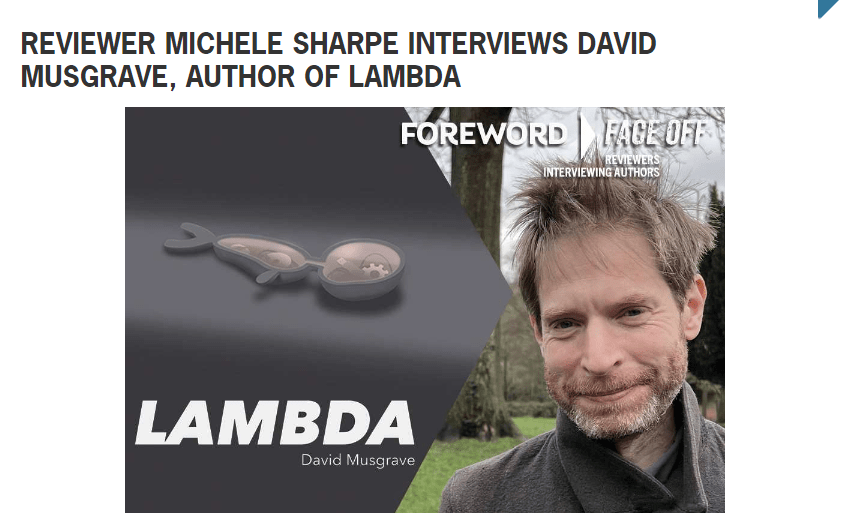
Can Objects have feelings?

Here’s my interview of British author David Musgrave, whose science fiction novel, Lambda, took me out of this world!

The book is an on-the-edge-of-your-seat story where even your toothbrush collects data on you. It also considers important questions about the meaning of being human and whether a near-future (a/k/a “now”) surveillance state impacts that meaning. By bringing programming languages and natural languages together, the book adds a meta layer to the question of whether objects can have sentience.

Click here, too, for my review of Lambda.

Review of “Folklorn” by Angela Mi Young Hur

54864318
Cover of Folklorn by Angela Mi Young Hur

I loved this book for many reasons. The interweaving of folktales with real and imaginary life made me question my vision of reality. The physics angle made me question my vision of reality. It’s well-plotted. The main characters are distinct, complex people I wanted to know about. The writing is fluid and rich in imagery. But what surprised me the most was the character of Oskar, a transnational, transracial adoptee who is originally from Korea but grew up in Sweden.
Adoptee characters in fiction and film usually follow a repetitive pattern. I’m a domestic adoptee, and I’ve thought a lot about Oedipus, Superman, Spiderman, and the zillions of other heroes who are separated from their parents, end up with substitute parents, go on a journey, challenge the status quo, and sometimes save the day. I challenge you, dear reader, to think of an archetypal hero who is not someone who has lost at least one parent.
Oskar, who is the possible love interest of Elsa (physicist, protagonist, and narrator) is the only transnational adoptee I can think of who is a supporting character in literature. In the 2021 adoptee community, the concept of “own voices” is often discussed, and I’m one of many who believes we adoptees should be the ones to tell our stories, not the adoptive or first parents who’ve been hogging the mic for so long. The author, Angela Hur, is not an adoptee, but in my view, she does justice to the complexity of losing biological connections and being uprooted to live with strangers. I’m interested to hear what transnational and transracial adoptees have to say about how well Hur explores the specific complexities of losing culture and being of a different race than adopters that Oskar lives with. Is Hur exploiting the TRA experience? No spoilers here, but interestingly, Oskar has written anti-adoption screeds by appropriating the stories of his fellow TRA friends — and they get pissed off.
So that’s a facet of the book that fascinates me, particularly, because of my connection to adoption, but that’s a single facet of a multi-faceted, literary, page-turning novel. I’d recommend this book to anyone and everyone.