Death, Poetry, Memory

North American Review posted my short prose piece on death, poetry, and memory at their blog: http://northamericanreview.org/michele-leavitt-blog/  Below is the poem that’s the subject of the blog entry.

Near-Elegy for Brother James

Just seven days ago, my palm
consoled your shoulder blades, as if
it read your future. This year of deaths
is almost done, and you are not dead yet,

just out of ICU with kicked-in ribs,
an eyelid split, and still hung over.
The screen porch steams with sausage,
shrimp, and corn, our family celebrating

one more baby with a feast. Across
the dusty street, our little girls
collect the cotton bolls a combine
left behind, and bunch them up

in thorny, white bouquets. Our last
surviving brother picks guitar.
The baby’s grandma cannot stand
the travesty of nothing hard

to drink. She leaves. You stay. You’re quite
a trooper. You draw the line at
coming back indoors with me to hear
our newest mother’s poem on hope.


(P.S. Note the shout-out in the blog to Kim Bridgford‘s excellent journal, Mezzo Cammin, where more of my elegies for family members are published.)

Placing Dream Images in Poems

UNEDITED
       -for Mary Rowlandson
I pull out my own tongue,
having no trouble grasping it.
I tear it out gradually,
and when it comes loose, I fling it on the quilt,

having no trouble grasping
I must live now without a tongue.
When it comes loose and I fling it . . .

read the rest of the poem here.

Since childhood, I’ve had occasional vivid dreams – the kind that are so weird, or colorful, or fantastic that they woke me up. When I started writing poetry (also as a kid), I thought the images and settings from those dreams belonged in poems.

Sadly, though, the images and settings by themselves didn’t translate very well for an audience. More than one creative writing teacher told me to ditch the dreams — they didn’t mean anything to anyone but me.

Many years later, I’ve found a way to make it work (sometimes) by placing those vivid images in a real-life contexts. The result is sometimes surreal, but the poems are getting published. “Unedited” is the latest one, which came out this weekend in Issue #19 of the fabulous journal, Rogue Agent

Mary Rowlandson, by the way, was the purported narrator of Narrative of the Captivity and Restoration of Mrs. Mary Rowlandson, perhaps the most well-known of the “captivity narratives” popular in Colonial America. However, the voice of that narrative sounds so much like the voice of Cotton Mather (the same dude that promoted the Salem Witch Trials) that I’ve often wondered if Rowlandson’s  words, or even her ideas, were edited.

Here’s to living unedited by those in authority.


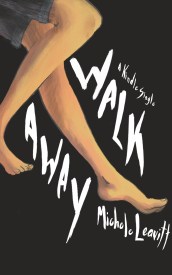
An Excerpt from WALK AWAY

Walk-Away-Cover-Final

At Knife Point, 1974

“Do whatever it takes to make sure you’re the one who walks away,” said Frank, my office mate. Outside the window behind him, a February San Diego rain dripped from the thorns of a massive agave. “Gouge out an eyeball, cram your fingers up the guy’s nose, punch him in the balls, and when he’s down on the ground, stomp on his neck and crush his larynx, whatever it takes. Get it?”

“Yeah,” I said. “Makes sense.”  Squeamishness had no place in Frank’s ex-convict world, and he didn’t think it should have any place in mine. I wondered if it were squeamishness, though, that prevented my blows from falling, or some sort of force field. When I tried to fight back against my boyfriend Jimmy, my fists and feet felt like the positive ends of magnets trying to smack the positive ends of other magnets: pushed back, repelled.

Frank was on parole from a murder conviction. He’d spent fifteen years locked up in the California prison system. Prison, he said, had pared him down to a man of few words, but he made sure those words counted. He was a slightly-built white man with a thin moustache and perpetually compressed lips. I was a sixteen-year old runaway, a short, curvy, dark-haired girl with muddy green eyes. Maybe Frank and I got on so well, right from the beginning, because we both liked to read. It was our literacy that put us at desk jobs rather than out in the field. We shared the office work, the filing, and the phone calls at an Episcopalian agency in San Diego that provided day work for released convicts.

“Whatever it takes! Only in self-defense, of course,” yelled Carlos from the kitchen behind my desk. “But, mira, if you get a guy down on the ground, if you stomp on that neck hard enough, you will break the larynx for sure, and he won’t be getting up to chase you.” Carlos was another no-heavy-lifting employee, and another man on parole from a murder conviction. Unlike Frank, though, Carlos’ years in prison seemed to have expanded him. He was average height, with a healthy-looking bronze tan, a barrel chest, and thick, muscular, hairy arms. He habitually stood with his shoulders thrown back and his arms slightly akimbo, a posture that said both “Let’s take this outside” and “Let me hug you.” He drove the van that drove the men to the day jobs.

“And if you carry a knife, no one should even know you got that knife until it is already stuck in his gut.”

I imagined sticking a knife into someone’s gut. “Right, Carlos. Makes sense,” I said, thinking of how sawing through chicken cartilage made me cringe.

Before being hired at the Episcopal agency, I’d been fired from a chambermaid job at the Islandia Hotel. When I got home from work that day with the bad news, Jimmy punched me in the face. That was where he always hit me. I hated appearing in public with visible lumps and bruises. I hated the way people looked at me, the way I imagined they pigeon-holed me. I hated the questions they asked, and I hated it when they asked no questions at all. I knew how people put me in a category – one of those girls who lets her boyfriend beat her, who will do anything to be loved – as if there were nothing more to me than this. My own flesh seemed to buy into that conclusion. Living with Jimmy, the skin around my eyes developed a memory for bruising, and the slightest smack would make my eyes swell up and shut, or at least make old bruises re-blossom. This time, he broke my nose. I didn’t go to a doctor, and I didn’t try to get my job back. Instead, I went into hiding.

Unable to make the sixty-five dollars rent on our apartment without my paycheck, we moved to the Annex Hotel, a rooming house. The first week there, I sat in our room reading library books. The room had just enough space for a single bed, a chair, and a chest of drawers. All of the furniture, including the mattress, sported cigarette burns, and the deadbolt on the door wiggled as if it had once been forced. The window led out to a black iron fire escape, where I sometimes sat and smoked and looked at the brick wall ten feet across the alley. The wall was the west side of the corner saloon that stayed open from seven a.m. to four a.m., seven days a week.

Every so often, I walked down the hall to the bathroom to check the progress of my healing in the mirror. After the first beating, I didn’t recognize myself, but disfigurement had taken on a familiarity, almost as if I owned two faces.

If I felt particularly sorry for myself, I would whisper “I love you” to my reflection. This had made me feel better after the first beating, but the ritual was losing its power. Sometimes I hung out for a few minutes in the communal kitchen to heat water for tea. Inevitably, I met the other tenants, who all seemed to be on a second-shift clock, emerging from their rooms well after noontime. When I ran into people in the hallway in the daylight hours, they were often disheveled or sleepy, but always friendly. No one seemed shocked or disgusted by my face. I started talking to people while Jimmy was out working, or looking for work, or whatever.

For a few weeks, before I was hired at the Episcopal agency, the rooming house was my world. Hovering over an abandoned storefront, it was a second-floor dimension few people noticed, perhaps because the first floor was boarded up. Sometimes police officers stood at the bottom of the oak staircase and shouted up names of people who were wanted, but the officers must have questioned the rickety nature of the staircase or even the substance of the second floor because they never walked up those stairs. They shouted up a name, and no one responded to them, except to yell meaningless obscenities. But on Sundays, little old Jehovah’s Witnesses ladies climbed the stairs in their pumps and stockings because the invisible was real enough to them. They knocked on doors, looking for tenants who were desperate enough to accept Jesus as a personal savior, and we hid in our rooms, terrified.

When I got hired at the Episcopal agency, the idea of working with ex-convicts didn’t bother me because many of the men who lived in the Annex Hotel were ex-convicts, and I had grown to like some of them. But they weren’t all as kind to me as Frank and Carlos, who liked to give me advice about how to protect myself. Some of the men at the Annex were petty thieves, and others were violent offenders. One Saturday morning, after Jimmy had gone off somewhere, I opened my door to find Fat Robert, one of the petty thief types, holding out two candy bars to me.

“Here you go,” he said. “I always like something sweet the morning after, and I thought you might, too.”  He was assuming I’d had a big drunk the night before for some reason, maybe just because everyone else in the hotel had. I didn’t bother to correct him; I was hungry, and I liked candy. We chatted for a couple of minutes, and then he toddled off down the hall as I began to gobble the candy bars, which were Clark Bars, too heavy on the nuts to be one of my favorites, but still a welcome treat.

About an hour later, there was another knock on the door. “It’s me, Fat Robert.”

I opened the door, and there was Fat Robert, his dumb-ass pork-pie hat titled at an annoyingly jaunty angle. Standing behind him was Eugene, who was not fat. Eugene was in his thirties, a convicted rapist, still powerfully athletic from days of lifting weights in prison. He had one of the few rooms in the hotel with a kitchenette. I had been in that room a few days earlier with Frances, who stayed in the hotel off and on. We’d gone down there to cook up some pinto beans and salt pork because the stove in the community kitchen was on the fritz. Frances was known as someone who did not take any shit. Just in case anyone doubted that, she kept a straight-edge razor hidden in the side of her bra, under her armpit, a wholly admirable practice in my eyes since I was desperate to toughen up.

Eugene’s room also had a triple bureau with a large mirror, and draped over the mirror were about a half-dozen pairs of women’s panties. While Frances and I checked the beans, he told us the panties came from women he had recently raped. Frances rolled her light green eyes at this; we both believed he had been in prison for rape, but we thought the panties were empty bragging about imaginary recent conquests. Like most of the residents of the Annex Hotel, like me until I got the Episcopalian job, Eugene rarely left the premises. It was as if we all had some form of agoraphobia, or some secret fear of daylight, or of cops, or of mothers walking down the street with strollers, or of someone asking questions.

At my door that morning, Eugene eyed me up and down over Fat Robert’s hat.

“See you later,” Fat Robert said, as he skittered away like an overfed roach, and Eugene stood alone, glaring in my face.

“You’re fucking Fat Robert,” he said.

I laughed. “Don’t be ridiculous,”

“You’re fucking Fat Robert, and you can fuck me, too.”

It was still morning and no one else in the rooming house had yet come to life. Rage and panic competed in my body, and for a moment, rage won. I was enraged that anyone would think that I, a young, attractive white woman who had her own young, attractive white man, would ever consider fucking a broken down old black man named Fat Robert who hid a bald spot under a pork pie hat.

“Fuck you,” I said to Eugene, and I slid out of the door way and stomped down the unlit hallway to the daylight of the open back porch. That was the panic part; I didn’t want to be caged in my little twelve by eight foot room. I didn’t want to be backed into a corner. Eugene followed me out.

“You’re fucking Fat Robert and now you’re gonna fuck me, too,” he yelled. He kept repeating this like a mantra as he stomped down the hallway after me, as if the inescapable logic of it would eventually penetrate into my stupid white girl brain.

“Fuck you,” I said again, unimaginatively. “I wouldn’t fuck Fat Robert with a ten-foot pole, and I’m not going to fuck you, either.”

We had both made it out onto the back porch, which overlooked a vacant lot that had morphed into a dump. Busted shopping carts and amputated car parts lay in the dirt, in the process of being overtaken by chicory and thistle.

Eugene pulled the bowie knife he kept on his hip out of its sheath. “Oh yes you are,” he said, as he placed one flat side of the knife under my chin. I remembered Carlos’ advice about not letting anyone know you had a knife until you had already stuck them with it. Eugene was making a mistake. My chin rested on the smooth, cold metal. I felt the curved point barely pressing into my flesh. He lifted my chin with the knife. I did not resist that lifting. The air on the back porch was cool and moist; fog from the bay had rolled in overnight and had not yet dissipated. He lifted my chin higher and higher, millimeter by millimeter, all the while repeating his syllogism, “You’re fucking Fat Robert and now you’re gonna fuck me, too.”

Maybe it was the disgust I felt at the thought of fucking Fat Robert. Maybe it was outrage at Eugene’s unstated middle term:  any woman who fucked Fat Robert was open for business. Maybe it was my brain’s reaction to having my chin lifted into a progressively defiant posture. Maybe it was pent-up rage. Maybe I was thinking of Carlos. Whatever it was, it made me curse and scream at Eugene. My head tilted back, my eyes narrowed, and my mouth ran with a river of obscenities. I balanced on the point of that knife until Eugene stopped his own yelling, let his arm fall to his side, and let his jaw drop, looking at me like I was a crazy woman. Then I broke away and ran back down the hall to my room, slammed the door and turned the lock just as Eugene started banging his fist on the door, still yelling. I pushed my little chest of drawers in front of the door and panted.

Summer issue of concis

Short family-tree-wombpoems! Who doesn’t love them? And it’s lovely to see them (online) in their printed glory. I’m honored to be included with Jennifer MacBain-stephens, Shinjini Bhattacharjee, Alexis Rhone Fancher, and many other gifted poets. Thanks to editor Chris Lott for including my piece “Family Trees for Bastards.”


CONCĪS

Goldenrod back east

Goldenrod

Goldenrod – it’s familiar to anyone who lives in the East, where it blooms late summer when the hayfields go brown. Today, it’s just starting to bloom in North Florida.

When I moved back to New England in summer, 2011 after a few years out west, goldenrod was one of the many elements of the Eastern landscape that were achingly familiar to me. As summer turned to autumn, I wrote a crown of sonnets, which became the title poem of a collection.

Back East


I.

Out West, I heard the phrase back East in tones

expressing every angle, every shade

reflected in the family prism: warm

red longing for the hearth, the reflex back

to what’s familiar, followed by obtuse

refusals, diluted yellow wistfulness,

or upright judgment paired with violet

nostalgia, straight-out breaks from what was done,

acute resentment toward the say-so

of parents pairing culture with discipline,

sustenance with table manners, shelter

with chores, and who say nothing valuable,

or even earnest, who impress their threats

on us: You leave, you can’t come home again.


II.

Whoever said you can’t come home again

was wrong. I’ve slipped in place back East like one

more river stone. Surfacing, a beaver

dog-paddles, torso flat and long.

She curls her spine and dives. Her broad tail smoothes

the tannic stream behind her like a mother’s

hand soothes passage. Midsummer: fields

of milkweed nod, pink before they pod;

The Monarchs reconnoiter, back again

to feed and mate and scout out homes for eggs.

The farm pond’s little boatmen dip their insect

oars and skim along, enough to make

the water glint. The osprey dives then rises,

gold clutched in his claws, the gold that swam

too near the line between the air and water.


III.

Too near the line between the air and water,

low clouds bluff and plump, collaging shades

of bruise and white and gray. Then rain sheets.

Before I know it, goldenrod tassels

yellow, brimming over green, the arc

of time as I recall it – thrumming summers

interrupted by synaptic longings

back to chilling snows. The twilit meadow

blurs its colors as if on purpose, as age

blurs imperfections, my image in the mirror

less well-defined than ever, less intriguing.

Gauzy threads of cirrus, backlit by

a gibbous moon, form gaps, framing now

and then a star, once I spot the first.


IV.

And then, like stars, once I spot the first

collect of ash leaves yellowing, I see

the turning everywhere, the sumac pinnates

tipped with orange, sugar maple palmates

edged with red — familiar, slow crescendo

toward October. Downhill, merlins flap

around a long-dead tree, then perch to spy

on kingbirds. Even with such names, they’re barred

from what’s between us – the briefly living – and

our fiery, dying sun. The Mourning Cloaks

feast on windfall apples, rotting sweet

and brown, as winds blow from the South, unsettled,

caressing us like volatile parents.

All night, their thunders wake us; rains lull us.

V.

All night, the thunder wakes us; rain lulls us

back to sleep. Repeat. The morning forest

drips crystals, leaf tips drenched and sparkling,

this bright illusion glossing ironies

of evergreens that brown and die like all

of us back east. The leaf-mold footpath sponges

underfoot, instant karmic mushrooms

reincarnate up through amber needles.

The crickets start their songs at noon as if

to cram time full: their manic chirps

resound like nextweeknextweeknextweek; they

predict the killing shards, the silver frosts.

Each funeral, a funeral for all

of us. Winter waits, the parents know.


VI.

The winter waits, a parent knowing we’ll

come home. October vapors silk above

the stream, miming ghosts and veils. The forest

floor, a wreck of branches after storms,

mocks our broken family trees. The row

of maples, cicatrized by sugaring,

stands witness roadside: nothing sweet is gleaned

without some cost.  Escape, impossible,

from autumn’s litany: fertility

brings loss, precedes decay.  November smacks

of fractals, stripped to spines and ribs and scars.

The last leaves spiral down in yellow, buff,

and ochre-red; winds lift them up to spin

like dervishes collecting spirits of the dead.


VII.

Like dervishes in flight from spirits of the dead,

we spin from South to North, from East to West,

a nomad race of animals condemned

to thinking we can torque the angles of

perspective, paint with undiscovered colors.

Our range is vast but finite: infrared

to ultraviolet, and zero to

three- sixty. The gold-tipped chrysalides have split,

the milkweed pods have split; a hundred seeds,

each with its hundred threads of silk, have left

or stayed.  Downhill, the long dead tree still stands;

a raptor lands like ash, and shifts her feet.

She turns her head in profile toward the wind,

the west we make our wishes on back east.
Creative Self-Care

You know you’ve hit rock bottom as a creative person if you start cleaning the bathroom during  time you’ve set aside to work on something that matters to you.

I’ve taken many “staycation” writing retreats – time off from the day-job to stay home to work on writing projects.  But, I often get distracted by my yard, my dogs, or even the ring-around-the-toilet. I love my home, and can rarely think of a place I’d rather be, but this week, for the first time in my life, I’m leaving all of my responsibilities behind. I’m off to Cedar Key, Florida for four days of writing.

Why haven’t I done this before? I’m cheap. That’s the answer that comes to mind first. Why spend money on a foreign location when I have a perfectly good home? Or maybe I thought I wasn’t worth it. But I am, and so is my writing.

In this, as in many things, I’ve been inspired by HipChick and sister writer Sandra Lambert, who’s been taking these retreats for herself for years in Cedar Key and elsewhere. I invited myself (bad manners) to join her this time. We’ll both be leaving  our beloved spouses, dogs, yards, and houses behind for efficiency condo units.on the Gulf.

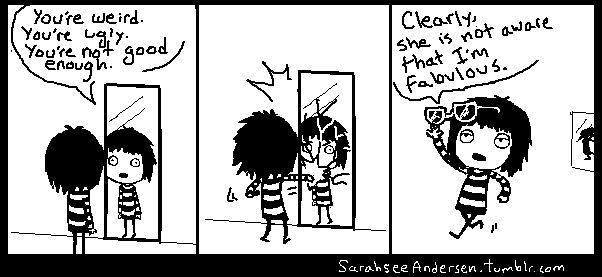
innercriticcomic

The critical little fear-monger devil inside my head stamps its little feet. The serene, sensible angel that’s also in there says Relax, Michele. You’ll only be 65 miles from home, and it’s the off-season.


Op-Ed in Gainesville Sun

cemetery
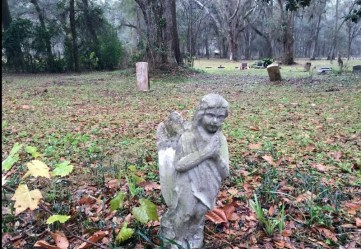
Pleasant Plain Cemetery, where three of the lynching victims are buried – photo credit, Gainesville Sun

Day of Remembrance Needed for Lynching Victims

Last March, I attended a talk by Patricia Hilliard-Nunn at the Matheson History Museum about the August 19, 1916, lynchings in an oak grove near the center of Newberry. I learned that a black man, Boisy Long, was accused of stealing hogs, and was blamed for shooting two white men in the dispute.

Long was ultimately arrested, tried and executed, but in the lawless search preceding his arrest, angry mobs of infuriated white people captured six other black people — four men and two women. The whites shot one of these men, James Dennis, and strung up the five other people by the neck in that oak grove. The Rev. Josh Baskins, Bert Dennis, Mary Dennis, Andrew McHenry and Stella Long died by hanging.

Hilliard-Nunn maintained a calm, open-hearted demeanor as she shared one devastating fact after another about this lynching in particular, and lynchings in general. She included historical data on the incidence of lynchings nationwide, and the fact that Florida had the highest per capita rate of lynchings in the country prior to 1949. She shared historical photographs of Newberry, including one of a large group of whites — men, women and children — standing over the bodies of the black victims.

What made me start to cry? Maybe it was the sheer accumulation of horror. Maybe it was the two black children sitting toward the front of the room with their father, who would live with these facts now, who might worry that this atrocity could happen again, who might worry they or their families would be victims, too.

Maybe it was the old white couple sitting next to them, who had to live with these facts now, too, who might also worry that this atrocity could happen again, who might worry they would be a part of it.

Maybe I was crying for my white ancestors, who may have cheered this 1916 lynching on, or who may have stood by, appalled.

Read the full article at http://www.gainesville.com/opinion/20160810/michele-leavitt-day-of-remembrance-needed-for-lynching-victims