Writing Memoir: Finding (Making?) Time

Writing Memoir: Finding (Making?) Time

“A large heap of broken antique watches and clocks” by Heather Zabriskieon Unsplash
How do creative people find the time to write? Or do they “make” the time?

Years ago, someone asked me how I managed to do so much. “It’s easy,” I said. “I don’t have kids!” The people who amazed me with their productivity — and who still amaze me — were the ones who parented young children.

Writing a memoir, or even a stand-alone personal essay, requires a huge investment of time, especially for slow writers like me. If it took me less than 40 hours to write a ten page story, I’d be very surprised. This month, I’ve committed to finishing a coherent draft of my 80,000-word, rough memoir draft. How will I manage my time to insure I meet that goal?

Strategy 1: Getting on a Schedule

This was effective for me when I worked a full-time, 8:30 am to 4:00 pm job. I was already on a schedule, so creating another one for writing made sense. Off and on, for months at a time, I got up at 5:30 am and wrote for about 90 minutes.

Scheduled writing has been famously successful for authors like J.K. Rowling, who also had a day job when she began the Harry Potter series. If you are subject to an external schedule, whether it’s related to school or work or family responsibilities, a writing schedule may do the trick for you.

But once I resigned from the day job to work for myself, the external schedule that kept me on track disappeared and I found myself floundering.

Strategy 2: Figuring Out When You Write Best and Write Most

Although I’m not trying to lose weight because that ship has sailed, I know that food journals are an effective way for people to track calories. So I decided to keep a time tracker to see where I was spending my time.

Like many people, I squander time on social media, mindless eating, and passive entertainment. When I’ve squandered enough, I get resentful when those I love interrupt my thoughts about writing or the writing itself. As if those people (and dogs) are the cause of my fribbling.

Decades of working day jobs created a habit of writing at odd hours: early mornings, nights, and weekends. Breaking from that pattern has not been easy, even though I expected to have nights and weekends free once I was “just” writing. But I’ve been writing at odd hours still, and not making enough headway on the memoir to satisfy myself.

Data is powerful. The time tracker showed me I was working on my memoir early in the morning and late at night, for about 90 minutes at a time. Ugh. Old habits are hard to break. It also showed me that I was working on paying writing projects during the day, like that was a day job. Ugh, again.

3. State Your Writing Goals Publicly

This month, I’m writing about writing memoir every day. And I put it on my Medium profile.

Two popular month-long writing marathons, NANOWRIMO and NAPOWRIMO inspire many people to successfully find or make time to write novels and poetry, respectively. I participated in NAPOWRIMO this year in April. Thirty poems later, I think 4 or 5 of them are actually worthwhile.

But, I’m convinced that 30 days in a row of writing a poem, or at least a wannabe poem, was helpful exercise for the poetry part of my brain. I even continued the process through the first week of May. Now, I’m slacking off again.

I heard that you’re more likely to meet your goals if you announce them publicly. Oh wait, I also heard that announcing your goals publicly makes itless likely that you’ll meet those goals.

4. Going on a Writing Retreat

A retreat doesn’t have to be anywhere but your own home; it’s a big chunk of time (a day or more, preferably) devoted to writing. I’ve done stay-home retreats, and cheap motel retreats. Some writers go on organized writing retreats.

For me, these chunks of dedicated time seem to work best when I have a specific goal to meet. That’s especially true if I go somewhere besides my home, where I may be tempted to check out a new ice cream parlor. For this reason, I advise going on a retreat in a place that’s not very appealing to your interests.

But even on a stay-home retreat, I can be distracted by chores that suddenly must be done. I’m not talking about walking the dogs or watering the plants, which really must be done to keep everyone alive. I know I’ve hit rock bottom when I find myself scrubbing a toilet instead of writing.


The best piece of advice about finding or making time to write is to experiment to find out what works best for you. We’re all different, thankfully.

And if you’re wondering about the right time to begin a memoir, that’s something I’ve thought about this week because two former students got in touch to say they are thinking of writing memoir. They were both curious about “the right time” to start.

My response was “Now is the time.” When an idea about doing something creative pops up, that’s a hint from the part of yourself that’s smarter than the rest of you. Go with it.

For more tips on writing memoir, visit me on Medium.
Writing Memoir: Photographs and Images

The boundaries between genres are blurring.

Fence. Photo by Simone Dalmeri on Unsplash

Why shouldn’t we include photographs in memoirs? The only reason I can think of is that some (maybe many) publishers don’t want the hassle. Publishing images is more complex, more expensive than publishing text only. Unless, of course, you’re publishing on the internet.

That damn internet. It’s changing everything.

Some publishers are welcoming work that combines text and image. Some of them are here on Medium. Many others can be found in this list of cross-genre publishers curated by New Pages.

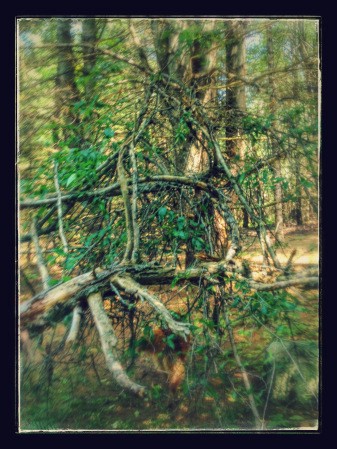
Here’s my attempt at a cross-genre piece combining photographs of trees with text about family trees.


Twisted branches. Photo credit: Michele Leavitt
Maybe it was me who doctored this photograph, trying to give it an heirloom appearance.

I see a “B” in this tree. Or maybe a “D,” or a sideways “A.”

Or a man, hanging face down with his arms extended, reaching for something on the ground.

Or a lizard with its tail curled up behind it. Or the predictable snake.

Or a tree, twisted by snow and ice, and the deaths of other trees, and by forces I cannot imagine, putting forth the predictable new growth in spring.

Unknown Dead Tree, North Central Florida

I leaned against trees, wrapped my arms around trees, swung from trees and hid in trees, and walked on limbs as if they were tightropes. I prayed to trees, I raged at trees. Far away, the half-brothers I now know cut trees down for very little pay.

In my private forest, which isn’t mine, but belongs to the town, I watch this tree, and the spiral of fungi around its trunk that curves around in question marks and other symbols. It might be my family tree: no hierarchy, no single ancestor, and certainly no single pattern.

Living Turkey Oak, fallen, North Central Florida. Photo credit: Michele Leavitt
This tree took the earth with it when it tipped over in a windthrow. It is the only tree in this quadrant that fell. Maybe another trauma, like heart rot fungus, affected its anchorage and prepared it to let go.The letting go starts a new creation story: a hole opens in the canopy, and sunlight pours down on the forest floor. Saplings stuck in the pole stage may wake up and start to grow gain.

New stories mean new names. The earth ripped up with the tree is now called a tip-up mound.

Dead Cypress, North Central Florida. Photo credit: Michele Leavitt
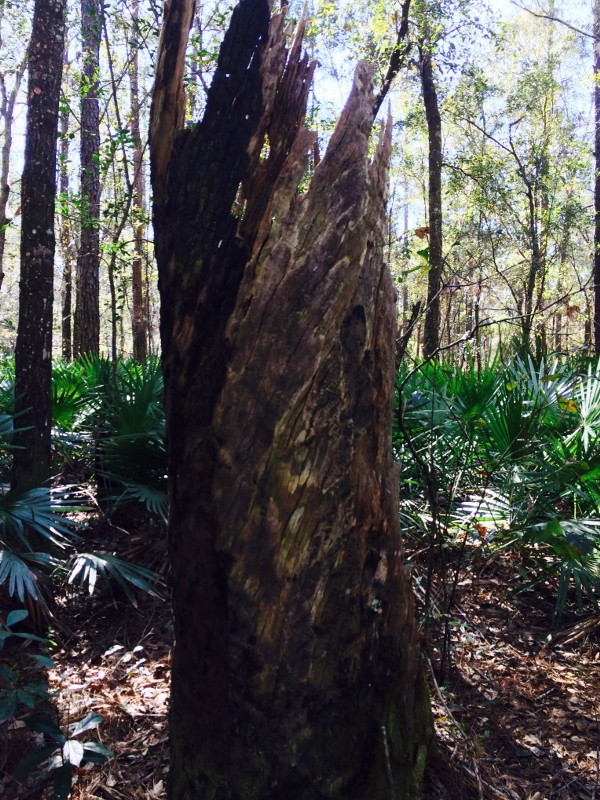
This tree has been dead for so long, you can see right through it in spots. How did that happen? I imagine the branches fell first, then the crown, and then the bark sloughed off like the skin of a snake, and then the core collapsed on itself. What’s left is a suggestion of the strong column it once was, a gesture toward how the column once spun upward in helix fashion.

What’s left of the tree has the pocked and scored look of the karst limestone under the ground around these parts. Maybe the tree has taken on some characteristics of the stone.

Even long dead, and even taking on other characteristics, the tree is still a tree.


For more tips on writing memoir, visit me on Medium.
Writing Memoir: Flashbacks and Braiding

Writing Memoir: Flashbacks and Braiding

Person standing still in front of a mural of a sneaker while cars zoom past. Photo by Ashim D’Silva on Unsplash

Real life happens chronologically, but memoirs and personal essays don’t have to. In fact, sometimes they shouldn’t if there’s some suspense or wisdom to be gained by juxtaposing events from various points in the past.

This technique is sometimes called using flashbacks. A more complex form of juxtaposing multiple times and threads is often called braiding.

Writers use several methods to alert readers to time changes in stories. The first involves simple signalling in phrases like “But ten years ago, I thought differently,” or “Two years before this event.”

A second method is to switch settings once you’ve already established a primary setting. An example might be found in a memoir about serving in the military in Vietnam. Whenever the writer flashes back to high school in America, we the readers will know that time has shifted too and that the high school is not in Vietnam.

Strong images or memorable characters associated with particular time periods can also serve as signals to the reader. A memoir that covers two marriages is one type of story that can use this technique, toggling back and forth between the two spouses or between two strong images like a granite fireplace in one marriage and a concrete swimming pool in another.

I’ve written a number of braided essays, and ironically that has made it difficult to compile them in my current memoir project, which is chronological. Maybe I should re-think that. But currently what I’m doing is chopping those essays up into their discrete times and threads in order to weave them back together in a chronological timeline.

One example of a braided essay that I’m currently chopping up is “Maternity Cave,” included in the March 2017 issue of Hippocampus. Like most of my publications, I worked on writing this piece for several years, and worked for even more years trying to figure out what the events in the story meant.

I don’t usually intend to braid different time periods, but it happens a lot. Every so often, a phrase or an image or a small event in daily life captures my attention as being connected to a phrase or image or event from the past. Those little a-ha moments are often the beginnings of my stories.

The maternity cave story begins in 2006 on a visit to a bat cave in Central Florida with my teenage niece Candi, where we saw thousands of little brown bats swirling up into the dusk, then it wiggles around in the 1990’s between my first marriage, my experience of infertility, and finding my birth family, and then it shoots ahead to a family picnic in 2016, when Candi is a grown woman with two children of her own. There was a moment at that picnic that lit up the past for me.

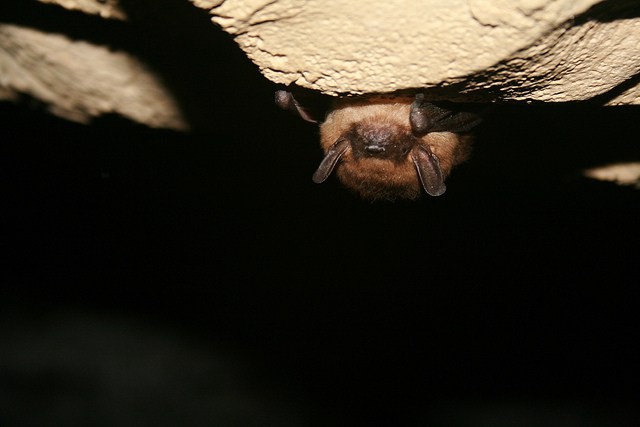
A bat hanging upside down in a cave. Photo credit  http://www.hippocampusmagazine.com/2017/03/maternity-cave-by-michele-leavitt/
The story doesn’t follow linear time, and I’ve been thinking lately that’s one of the benefits of being a reader of personal essays: we get to experience hard-earned wisdom in a way that isn’t tied to chronology. We get to look back, be in the present, and jump ahead to the future in less time than it takes to bake a cake. There’s no undo or do-over button because truth doesn’t change, but at least we get to see truth’s trail.

Memoirs and personal essays are time capsules, freezing us in a series of moments. But they can be time machines, too, taking us forward and backward, allowing us to grab on to the hindsight and foresight in someone else’s experiences, even when that sort of wisdom escapes us in our own lives.

For more tips on writing memoir, visit me on Medium.

How to Find or Start a F2F Writing Workshop

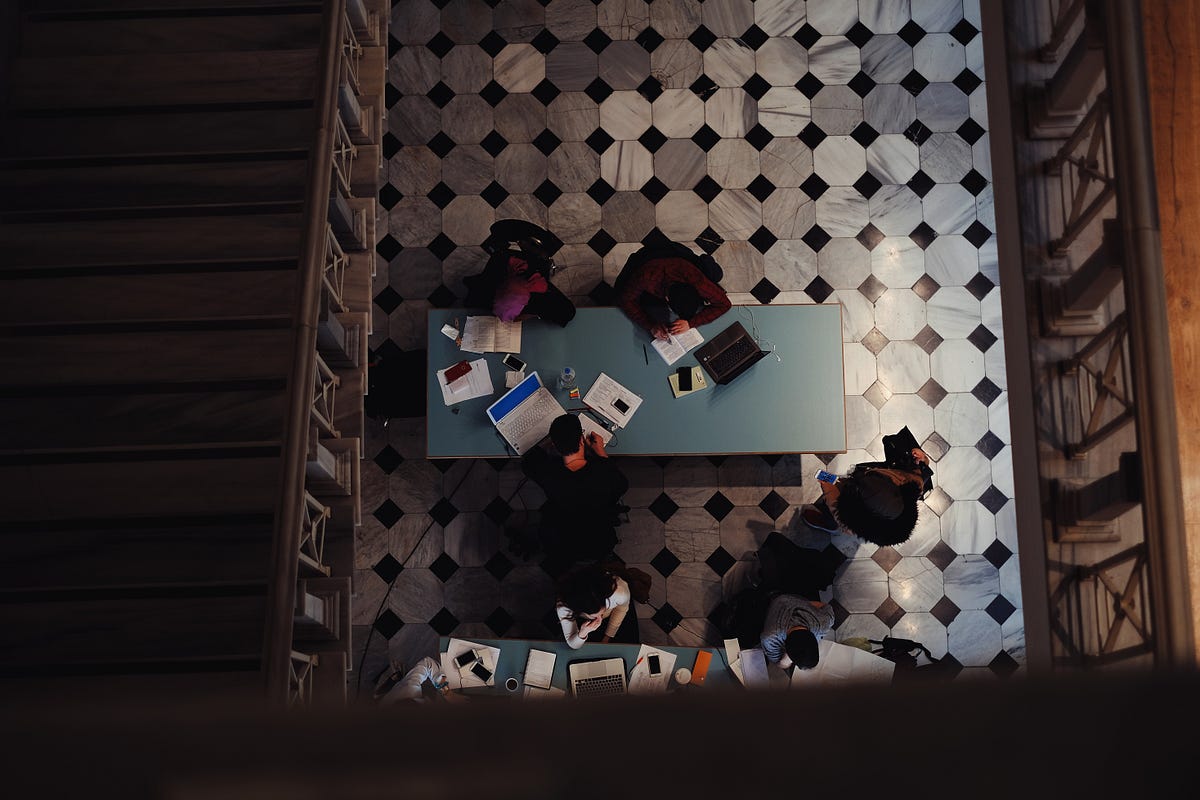
Overhead shot of writers working. Photo by Emre Gencer on Unsplash

Writing doesn’t always have to be a solo gig. And it probably shouldn’t be if your goal is getting published. Feedback from other writers and readers is a time-tested way to improve your own work, whether you write poetry, fiction, or nonfiction. Community-based workshops provide free feedback, and they can help writers grow. So how can you find or start one?

Some people prefer to meet in face-to-face groups, and others prefer an online format. Both have their advantages, but my post for The Writing Cooperative spells out four strategies for the F2F world.

Strategy #1: Take a writing class at your local college or recreation center and meet other writers.

These classes are usually quite inexpensive; since we’re zeroing in on free here, though, it’s what comes after the class that’s of interest. You may find kindred spirits in the class who want to continue meeting after the class is over.

The first writing group I belonged to was with a group of women I met in a poetry writing class at a state college. We’d all had such a good time in the class that we didn’t want it to end, so someone — maybe me — suggested that we meet twice a month after the class ended. One of the members had young children, so for several years we met at her home.

That group continued to meet for about ten years, and the professor from our original class ended up joining us. Two of the things that made it work logistically were having a regular time to meet, and a regular place to meet. That predictability made it possible for members to occasionally miss a meeting without losing track of the group.

Strategy #2: Attend a public reading and talk with other attendees. Many people who attend readings are writers. Ask if there are any writing groups in your area looking for new members.

Want to keep reading? This article continues at The Writing Cooperative


Poetry with Humor

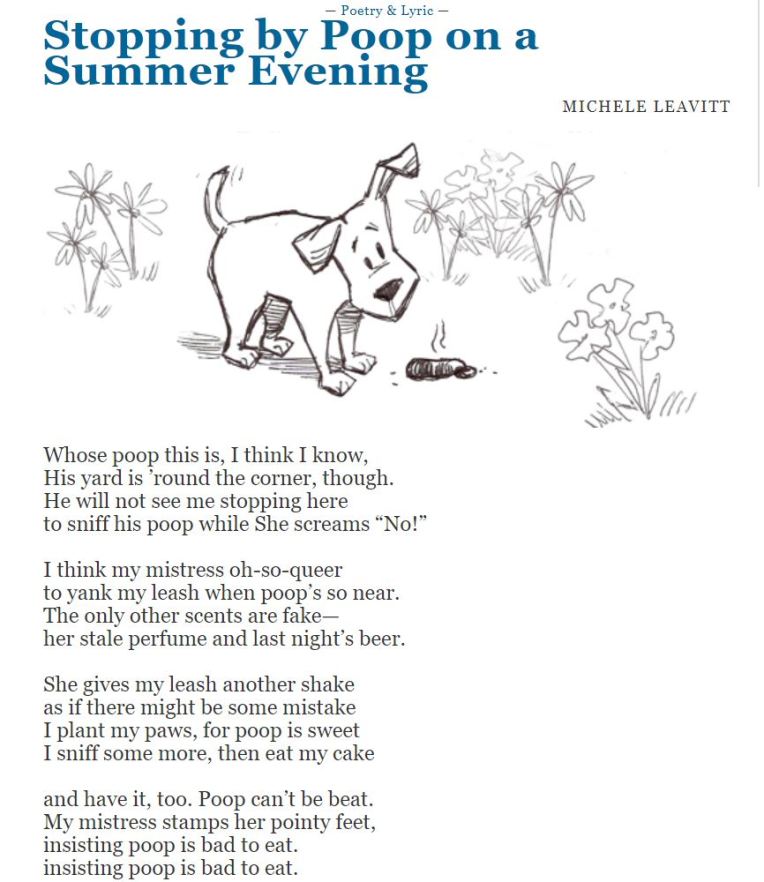
Humorous poetry is known for being a bit off-color. Or more than a bit. Here’s my Medium post for April 5 with links to cool light poetry sites and one of my own funny poems — a parody of Robert Frost’s classic “Stopping by Woods on a Snowy Evening.”  I hope the Ghost of Frost forgives me.

https://medium.com/@micheleleavitt/poetry-with-humor-6d8ae992f797

Stopping by Poop

Two new poems at WTP

Two new poems are up at The Woven Tale Press, a lovely online magazine that features stunning visual art in addition to poetry. One of the new poems is actually a few years old, written while I was participating in the Unity College hemlock project.

forest moon

The other poem, copied below from the issue, came from a nighttime walk in the woods in late spring. The moon shone through tree branches onto the path, making chiaroscuro patterns.

Walking in the woods at night, I’m sometimes startled by sudden noises or shadows — usually my neighborhood’s astonishingly voracious deer herd.

Still, it’s easy to startle at night, alone. But maybe we aren’t alone.


Image may contain: text

Displaced Homemakers: Then and Now

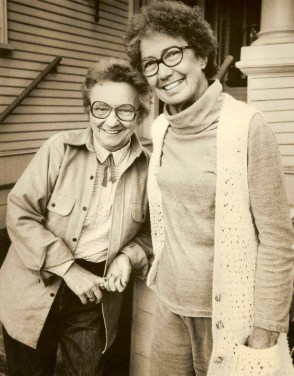
Tish Sommers and Laurie Shields
Laurie Shields (left) and Tish Sommers

In the 1970’s, as the American divorce rate rose, women who performed unpaid work in the home and who relied on husbands for economic security increasingly found themselves displaced. With limited paid work histories, many ended up living in poverty and confusion, struggling to achieve independence in a culture that had dismissed them.

Two extraordinary women, Laurie Shields and Tish Sommers had experienced the “displaced” phenomenon themselves. They put together a national coalition of activists and successfully lobbied 39 states and the federal government to create programs to train and counsel women.

Tish Sommers came up with the term “displaced homemaker” because she saw parallels between the experiences of women who were ousted from the homemaker role they expected to play for life, and the experiences of people who are forcibly exiled from their homes through political upheaval. Women who were displaced as homemakers by death, divorce, desertion, or disablement of a husband could find themselves ineligible for Social Security benefits, for unemployment benefits, and for welfare benefits. With little paid work experience, they could appear unemployable. As Laurie Shields notes in her 1981 book, Displaced Homemakers: Organizing for a new life, “homemakers assumed that retirement benefits, health insurance, and economic security flowed from their marriage.” When marriage ended, or a husband became unable to work, the safety net of marriage came unstrung.

How widespread was this phenomenon? In 1976, the Department of Labor estimated there were 4 million displaced homemakers in America, and that 3 million of those were between the ages of 40 and 64. Statistics like these, and the personal stories of women who’d been displaced, created a public outcry and support for programming. Columnist Ellen Goodman noted that women in these circumstances were caught “between the expectations of one decade and the reality of another.”

The first displaced homemakers program was authorized by the California legislature in 1975. By 1979, approximately 300 programs operated nationwide, but opposition among anti-feminists was strong.

schlafly
Phyllis Schlafly promotion for defeat of the E.R.A.

Phyllis Schlafly, perhaps the most well-known anti-feminist of the time, and, ironically, a “career woman,” was especially suspicious of displaced homemaker programs, calling them “nothing but indoctrination and training centers for women’s lib. The feminists who run such centers use them to push ERA, abortion, federal child care, lesbian privileges, etc.”

Sommers and Shields were puzzled by the level of outrage against displaced homemaker programs. They wondered if some of it was age bias. Nevertheless, they persisted through years of drafting legislation and lobbying in Congress and at the state level. In 1978, President Jimmy Carter signed the revised Comprehensive Employment and Training Act (CETA), which included provisions related specifically to the employment needs of women, providing a method for funding programs for displaced homemakers. In 1984, passage of the Perkins Act, which provided career-development funds for women’s training, further ensured the viability of displaced homemaker programs.

The Displaced Homemakers Network formed by Sommers and Shields evolved into a national organization that hosted annual conferences where program staff from across the country met to exchange strategies for helping displaced women. Some of the challenges faced by women at that time included a high rate of unemployment ascribed to age and a lack of paid work experience, along with limited opportunities for assistance from social security, unemployment compensation, medicaid, and benefit or pension plans arising from the husband’s employment.

Displaced Homemaker Programs (DHPs) provided services across the nation through the end of the twentieth century. With support from state, federal, and private foundation grants, the programs helped women achieve economic independence and personal confidence. The first challenge to their funding arose in 1998 when the Perkins Act was stripped of its gender-equity provisions. In the past ten years, there have also been funding cuts on the state level.

For example, in Florida, Displaced Homemaker Programs drew on a state trust account that was funded by state marriage and divorce fees. The trust was dissolved in 2017 by Governor Rick Scott. Of the seven programs active at that time, only one remains: a program at Santa Fe College where I was lucky enough to collaborate with the DHP staff as part of my work with the Women’s Economic Stability Initiative.

DHP pantsuits

Here we are (at left) in a photograph taken shortly before the 2016 presidential election. The poster image is of the program’s patron saint — Rosie the Riveter. The Santa Fe program survived budget cuts thanks to college president Jackson Sasser’s commitment to the program.

My experience on the fringes of Santa Fe’s DHP proved to me without question that there is still a deep need for programs that help women navigate changes brought on by the loss of financial and emotional support. But who is today’s homemaker, and how likely is it that she will experience some version of being “displaced”?

Although more women today have college degrees than ever before, younger women opting to stay at home to care for children still suffer serious impairment to their overall earning capacity. And as health care costs increase, many older women choose to care for elderly family members at home, giving up or reducing their employment income.

Disagreement exists about the current American divorce rate. Some academics see the divorce rate going down, while others argue it’s holding steady at about 50%. Interestingly, though, at least one group of researchers claims the divorce rate for people aged 55 to 64 “has quadrupled over the past three decades.”

In the ever-changing culture of America, disruption and displacement seems more likely than not. Women, and men, will continue to lose the security of marriage and family. They will need programs like Santa Fe’s that support their employment goals and personal goals. “I’m living proof the program works,” said one participant in an interview with local media. “I can smile again. I have self-confidence. They’re my family.”

Menopausal Moments: One Reason Teachers Don’t Need Guns

woman beside wall by Ursula Madariaga via PexelsStudents often want to write papers about the same old topics. Abortion. Legalizing weed. The death penalty. Gun control.

Read a few dozen of those papers, and you’ll want to stick a knife right in your own damn head. I banned papers on these often-plagiarized topics. But I did sometimes allow class discussion.

If the topic of gun control came up in my classroom, I’d ask my students to imagine I’d come to class in a menopausal rage.

“If I had a knife, and I threw it at John there in the back row, and it stuck right in his head, what would y’all do?” I’d ask.

Students would laugh, scream, squeal, or pick at their fingernails, but one would finally say “We’d jump on you.”

“Exactly,” I’d say. “Now imagine I came into class with a semi-automatic weapon and started mowing y’all down in one magnificent menopausal moment. What would you do then?”

I wouldn’t make that argument in a classroom today; in fact, I never made it again after Sandy Hook. But there’s another reason teachers shouldn’t have guns besides being driven mad by menopause or by having read too many crappy essays.

Teachers are human beings, and human beings fuck up.

In all the talk about the right to bear arms and the Constitution, this simple fact never seems to come up — that human beings are fallible. We do things we don’t intend to do. We lose our tempers, and we lose our minds. All of us.

Yesterday, a teacher and off-duty police officer accidentally fired a gun while teaching a public safety class. As far as I can tell, he isn’t menopausal. Thankfully, there were only minor injuries. . .

You can read the rest of this post (minus the f-word), if you like, on Medium


person Michele Leavitt, three poems

Three new poems up on isacoustic*. Thanks to poet/editor Barton D. Smock and poet/literary citizen Trish Hopkinson.

The first poem in this group is partly a found poem, with lines taken from a scientific paper on rocky beaches, like the one where I grew up.

barton smock's avatarISACOUSTIC*

Michele Leavitt, a poet and essayist, is also a high school dropout, hepatitis C survivor, adoptee, and former trial attorney. Her essays appear in venues including The Rumpus, Guernica, Catapult, and The Sycamore Review. Recent poems can be found in Poet Lore, North American Review, Stirring, and Baltimore Review.

~

Draft for the End of an Age

Bored with pornography
and other self-evidences,
like In sea-ice occurrences, duality is distinguishable
only by presence or absence of perennial ice,
we crave
complexity, the fractal coastline intricacies
that play a vital function
in regime shifts.
We already knew
sediment composition of raised gravel beaches shows a high degree of uniformity.
Although the dominant
clast shape is oblate,
rock outcroppings

still project seaward, and this suggests
some kind of threshold crossing
beyond a groom carrying a bride
over a doorstep.
Stop writing about us. Listen – do
you hear the grating…

View original post 261 more words